The best audio interface with low latency makes recording and monitoring feel immediate, whether you are tracking vocals, playing guitar through software, streaming, or producing music at home.
This roundup compares 10 two-channel and compact interfaces across sound quality, connectivity, monitoring, portability, and ease of use so you can choose a setup that fits your workflow and budget.
Best 10 Audio Interface with Low Latency Picks for 2026
Best Overall
Focusrite Scarlett 2i2 4th Gen

- Two mic preamps and Hi-Z instrument inputs
- 120dB dynamic range with 24-bit/192kHz support
- Auto Gain, Clip Safe, and included recording software
Best For: Home-studio musicians recording vocals and guitar
Best Budget Pick
PIYONE Q28 2x2 USB-C Interface

- Plug-and-play USB-C operation with bus power
- Two combo inputs and 48V phantom power
- Direct monitoring for zero-latency tracking
Best For: Portable two-input recording and streaming setups
Best for Expansion

- 4x4 USB-C connectivity for expanded routing
- Low-latency hardware monitoring and loopback
- MIDI I/O and LCD screen included
Best For: Growing music, podcasting, and streaming setups
Best Monitoring Options
BlueAVS AR013 USB Audio Interface

- Four zero-latency monitoring modes
- Two combo inputs with phantom power and PAD switches
- 2-in/4-out USB-C design for recording and streaming
Best For: Creators needing flexible monitoring for streams and podcasts
Portable Starter Pick
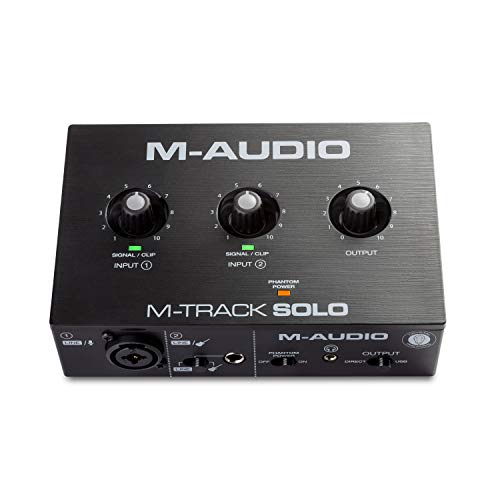
- Zero-latency USB/Direct monitoring
- Combo input with phantom power
- Portable 48kHz recording interface
Best For: Beginners, podcasters, guitarists, and streamers
Streaming Control Pick

- Ultra-low-latency monitoring
- 80dB XLR microphone gain
- Onboard effects and Wave Link routing
Best For: Streamers and voice-focused creators
Budget Starter

- Two-channel USB interface with 16-bit/48kHz audio
- 48V phantom power and low-latency operation
- XLR and 3.5mm inputs for beginner setups
Best For: Beginners, karaoke, and basic home recording
High-Resolution Home Studio

- 24-bit/192kHz recording for detailed home-studio audio
- Two combo XLR/1/4-inch inputs with 48V phantom power
- Low-latency monitoring and Windows/Mac plug-and-play use
Best For: Musicians, podcasters, and content creators
Direct-Monitoring Pick

- Mono or stereo direct monitoring for delay-free tracking
- Combo XLR/1/4-inch inputs and 48V phantom power
- Includes cables and supports multiple operating systems
Best For: Recording, podcasting, and streaming with real-time monitoring
Best Overall – Focusrite Scarlett 2i2 4th Gen
The Focusrite Scarlett 2i2 4th Gen is a strong choice if you want an audio interface with low latency for vocals, guitar, and compact home-studio recording. Its two inputs, 24-bit/192kHz support, Auto Gain, Clip Safe, and direct monitoring features make it practical for new and experienced creators.
Best For: Musicians recording vocals, guitar, and other two-source setups.
Pros:
- Two mic preamps and Hi-Z instrument inputs support flexible recording.
- 120dB dynamic range and 24-bit/192kHz conversion support detailed recordings.
- Auto Gain and Clip Safe help simplify level setting and prevent clipped takes.
- Includes a broad software bundle with Ableton Live Lite, Cubase LE, and plugins.
Cons:
- Two inputs may be limiting for larger recording sessions.
- The included USB cable is USB-A to USB-C, which may require an adapter for some setups.
Choose the Scarlett 2i2 when polished conversion, straightforward controls, and helpful recording safeguards matter more than having numerous inputs. It is especially well suited to a personal studio or mobile two-channel rig.
Best Budget Pick – PIYONE Q28 2×2 USB-C Interface
The PIYONE Q28 is an audio interface with low latency aimed at creators who want a portable, plug-and-play setup. Its USB-C bus power, two combo inputs, 48V phantom power, and direct monitoring cover the essentials for simple recording, streaming, and mobile-friendly workflows.
Best For: Budget-conscious laptop and mobile creators needing two inputs.
Pros:
- Class-compliant USB-C connection requires no drivers for Mac and PC use.
- Two XLR/TRS combo inputs accommodate microphones, instruments, and line sources.
- Direct Monitor provides silent, zero-latency tracking.
- 24-bit/192kHz recording and 48V phantom power support studio-style sources.
Cons:
- The supplied details list Windows compatibility, so users of other operating systems should verify support.
- Its two-channel design is less suitable for multitrack or larger ensemble recording.
The Q28 makes sense when ease of setup and portability are priorities. It offers useful monitoring and connectivity for basic vocal, guitar, podcast, and streaming sessions without requiring an external power supply.
Best for Expansion – MOTU M4 4×4 USB-C
The MOTU M4 is a practical audio interface with low latency for creators who need more routing capacity than a basic two-input model. It provides 4×4 USB-C connectivity, MIDI I/O, hardware monitoring, loopback, and an LCD screen for recording, mixing, podcasting, and more involved setups.
Best For: Musicians, podcasters, and streamers who need expanded I/O and routing.
Pros:
- 4-in/4-out connectivity supports more simultaneous sources and outputs.
- Hardware monitoring is designed for low-latency tracking.
- Loopback is useful for podcasting, streaming, and routing computer audio.
- Includes MIDI I/O and a front-panel LCD screen.
Cons:
- Its larger feature set may be unnecessary for simple one- or two-source recording.
- The supplied notes identify two microphone preamps, so not all four inputs are described as mic preamp inputs.
The M4 is the better fit when your setup may grow beyond basic stereo recording. Its additional I/O, MIDI, loopback, and monitoring functions make it a versatile centerpiece for production and content creation.
Best Monitoring Options – BlueAVS AR013 USB Audio Interface
The BlueAVS AR013 is an audio interface with low latency designed for recording, livestreaming, podcasting, and guitar use. Along with two XLR/TRS combo inputs and 24-bit/192kHz recording, it offers four monitoring modes, independent phantom power, PAD switches, and balanced outputs.
Best For: Streamers, podcasters, and musicians who want flexible real-time monitoring.
Pros:
- Zero-latency monitoring includes Off, Mono, Crossfeed, and Stereo modes.
- Two combo inputs support microphones, guitars, and line-level devices.
- Independent 48V phantom power and PAD switches accommodate varied sources.
- USB-C connectivity works with major recording and streaming software on multiple operating systems.
Cons:
- The stated one-year manufacturer coverage is shorter than some competing options.
- Its 2-in/4-out configuration may be more output-focused than necessary for basic recording.
The AR013 stands out when monitoring flexibility is central to your workflow. Its selectable monitoring modes and source-handling features are useful for creators switching between music recording, livestreaming, and spoken-word production.
Portable Starter Pick – M-Audio M-Track Solo
The M-Audio M-Track Solo is a compact, straightforward choice if you need an audio interface with low latency for podcasting, recording, or live streaming. Its USB/Direct switch supports zero-latency monitoring, while the combo input, instrument input, and phantom power accommodate common home-recording setups.
Best For: Beginners, mobile creators, guitarists, podcasters, and streamers seeking a portable two-channel interface.
Pros:
- USB/Direct switch enables zero-latency monitoring.
- Combo XLR/line input includes phantom power, plus a separate line/instrument input.
- Includes MPC Beats and supports 48kHz audio recording.
Cons:
- Maximum sample rate is 48kHz.
- Monitoring outputs are limited to RCA and a 1/8-inch headphone output.
The M-Track Solo keeps the essentials simple and portable. It is a practical fit for basic recording and streaming, especially when direct monitoring matters more than advanced routing or higher-resolution formats.
Streaming Control Pick – Elgato Wave XLR MK.2
The Elgato Wave XLR MK.2 is a focused audio interface with low latency for streamers and creators who want hands-on control over an XLR microphone. It combines ultra-low-latency monitoring with 80dB of gain, onboard processing, touch mute, and Wave Link software for routing and effects.
Best For: Streamers, broadcasters, and voice-focused creators using a single XLR microphone.
Pros:
- Provides ultra-low-latency monitoring at 24-bit/48kHz.
- Offers up to 80dB of gain for a broad range of XLR microphones.
- Includes onboard voice effects, touch mute, LED feedback, and Wave Link integration.
Cons:
- Accepts XLR input only, limiting instrument and line-input flexibility.
- Wave Link requires Windows 11 or Apple Silicon Mac.
With its strong gain range and integrated DSP workflow, the Wave XLR MK.2 is designed around polished voice production and live control. It is less versatile for multi-instrument recording but compelling for a dedicated streaming setup.
High-Resolution Value Pick – 2i2 USB Audio Interface
This compact 2-in/2-out model is a flexible audio interface with low latency for recording microphones, guitars, keyboards, podcasts, and streams. It includes direct monitoring, 48V phantom power, USB-C connectivity, and plug-and-play operation for beginners working on a computer or compatible mobile device.
Best For: Beginners and home creators who need two inputs, direct monitoring, and phantom power in a compact interface.
Pros:
- Two inputs and two outputs support vocals, instruments, and basic simultaneous recording.
- Direct monitoring is designed for minimal-latency recording.
- Offers 48V phantom power and USB-C plug-and-play connectivity.
Cons:
- Supplied details list a 48kHz maximum sample rate despite the product title referencing 192kHz.
- Warranty coverage is limited to six months.
- Operating-system details specifically list Windows.
The 2i2 provides useful starter features at a compact size, particularly for creators who want two-channel recording and direct monitoring. Verify sample-rate and device compatibility details before buying if those specifications are critical to your setup.
Budget Starter – XTUGA Q-12
The XTUGA Q-12 is a straightforward audio interface with low latency for beginners building a compact two-channel setup. Its USB connection, 48V phantom power, and XLR plus 3.5mm inputs support vocals, karaoke, streaming, and basic music production without requiring an external power adapter.
Best For: Beginners, students, home karaoke, and simple computer-based recording.
Pros:
- Provides two inputs with 16-bit/48kHz recording resolution.
- Includes switchable 48V phantom power for condenser microphones.
- USB plug-and-play operation works with Audacity, Ableton Live, FL Studio, and Pro Tools.
Cons:
- Its maximum sample rate is 48kHz, below the 192kHz capability of some alternatives.
- The 3.5mm microphone input may be less versatile than a second combo XLR/quarter-inch input.
The Q-12 focuses on accessible controls and dependable everyday use rather than advanced studio expansion. It is a sensible low-cost choice when low-latency monitoring and simple setup matter most.
High-Resolution Home Studio – KA2 2×2 Interface
This 2×2 USB interface is an audio interface with low latency aimed at creators who want higher-resolution recording for vocals, guitars, podcasts, and home-studio projects. Its two combo XLR/1/4-inch inputs, 48V phantom power, and independent monitor outputs provide a flexible starting point for recording on Windows or Mac.
Best For: Home-studio musicians, podcasters, streamers, and creators wanting 24-bit/192kHz recording.
Pros:
- Supports 24-bit/192kHz high-resolution audio capture.
- Two combo inputs accept microphones, instruments, and line-level sources.
- Offers plug-and-play Windows and Mac compatibility with major DAW software.
- Independent TRS/TS outputs connect speakers, monitors, amplifiers, or recording equipment.
Cons:
- The listed manufacturer warranty is 90 days.
- The product details do not specify a separate direct-monitoring control or mode.
The KA2 is the most recording-focused option here for users who value high sample-rate support and flexible connectivity. It balances a compact 2×2 layout with features suited to a growing home studio.
Direct-Monitoring Pick – Wrugste 2-in/2-out
The Wrugste is an audio interface with low latency that emphasizes direct, delay-free monitoring for recording and streaming. Its two combo inputs accept XLR or 1/4-inch connections, while rear TRS outputs support powered studio monitors and the included cables make setup more convenient.
Best For: Musicians, podcasters, and streamers who prioritize direct monitoring and broad device compatibility.
Pros:
- Mono and stereo direct-monitoring modes are designed for delay-free real-time listening.
- Combo inputs support microphones, guitars, instruments, and line-level signals.
- Includes 48V phantom power and 2 x 1/4-inch TRS line outputs.
- Package includes a USB-C interface, XLR cable, USB cables, adapter, and manual.
Cons:
- The supplied details list a 96kHz maximum in the specifications despite marketing that mentions 192kHz.
- As a lesser-known brand, it may offer less established brand recognition than mainstream interfaces.
The Wrugste stands out when monitoring delay is the primary concern. Its direct-monitoring switch, included accessories, and support for Windows, Mac, Linux, and Android make it a versatile value-oriented option.
How We Picked the Best Audio Interface with Low Latency
We focused on interfaces that support responsive monitoring and dependable computer recording, while comparing practical features rather than headline specifications alone. The selection includes established models from Focusrite, MOTU, M-Audio, and Elgato alongside lower-cost alternatives with common home-studio features.
Our comparison considers input and output count, connection type, driver or software support, phantom power, direct monitoring, sample-rate capability, build quality, and the needs of musicians, podcasters, streamers, and mobile creators. A high sample rate does not automatically guarantee low latency, so overall system design and computer compatibility matter.
Quick Comparison
| What to compare | Best fit |
|---|---|
| Simple vocal or instrument recording | 2-in/2-out interface with combo inputs |
| Multiple monitors or routing options | 4-in/4-out model such as the MOTU M4 |
| Streaming and voice processing | Interface with onboard DSP or mixer controls |
| Budget recording | Compact USB interface with direct monitoring |
| Mobile or iOS recording | USB-C model with compatible power and adapters |
Key Buying Factors for an Audio Interface with Low Latency
Connection and Driver Support
USB-C describes the connector, not necessarily the performance. Check whether the interface works with your Windows, macOS, or iOS device and whether the manufacturer provides stable drivers. Reliable drivers often matter more than maximum sample rate when recording with software instruments or effects.
Direct Monitoring and Round-Trip Latency
Direct monitoring routes an input to the headphones or speakers without sending it through the computer, which can eliminate distracting delay while recording. If you need to hear plugins in real time, look for efficient drivers, adjustable buffer settings, and, where available, onboard DSP processing.
Inputs, Outputs, and Controls
Two combo inputs cover most solo recording tasks, while four or more inputs are better for drums, band rehearsals, multiple microphones, or external hardware. Confirm that outputs match your monitor setup and that headphone volume, monitor level, and input gain are easy to reach.
Phantom Power and Recording Quality
Condenser microphones generally require 48V phantom power, while dynamic microphones and instruments may not. 24-bit recording is standard for flexible gain staging, and 192kHz support can be useful in specialized workflows but should not outweigh input quality, noise performance, or stable operation.
Who Should Buy Which Audio Interface with Low Latency?
Choose a compact 2-in/2-out model if you record one or two sources at a time and want an uncomplicated home setup. Choose the MOTU M4 or another higher-I/O interface if you need more routing flexibility, multiple outputs, or room to expand.
Choose an interface with DSP or mixer controls if you stream, monitor processed vocals, or want hands-on control over a broadcast mix. Choose a budget model for basic podcasting, demos, guitar, and voice recording, but verify build quality, noise performance, included cables, and operating-system compatibility before buying.