Acoustic simulator pedals for electric guitar can turn a familiar solid-body tone into a more convincing acoustic-style sound for gigs, recording, and quick set changes.
Below, we focus on pedals that balance realism, ease of use, and value so you can choose the right option for your rig without the guesswork.
Best 10 Acoustic Simulator Pedals for Electric Guitar Picks for 2026
Best for Versatile Acoustic Modeling
BOSS AC-3 Acoustic Simulator Pedal

- Four acoustic simulation modes
- Built-in reverb for added realism
- Compact pedalboard-friendly design
Best For: Players who want a compact pedal with multiple acoustic tone options for live use.
Best Value Mini Simulator
JOYO JF-323 Wooden Sound Acoustic Simulator

- Compact mini-pedal format for tight pedalboards
- Simple High/Mid/Bass/Volume controls
- True bypass with low 22mA power draw
Best For: Players who want an affordable, easy acoustic-sim option for live sets or quick recording changes.
Best for Direct Recording
SONICAKE Acoustic Guitar Effects Pedal

- Analog preamp with digital reverb for added acoustic-style texture
- XLR balanced output for direct PA or recording use
- Notch filter and mute help reduce feedback on stage
Best For: Players who want a simple acoustic-style pedal with direct output and feedback control.
Best for Simple Acoustic Tones
MOOER Acoustikar Acoustic Guitar Pedal Simulator

- 3-mode voice shaping for piezo, standard, and jumbo tones
- Compact pedalboard-friendly design
- Good pick for adding acoustic-style texture to an electric guitar
Best For: Players who want a simple, compact pedal to approximate acoustic guitar tones from an electric guitar.
Best for Natural Analog Tones
Acoustic Guitar Simulator Pedal
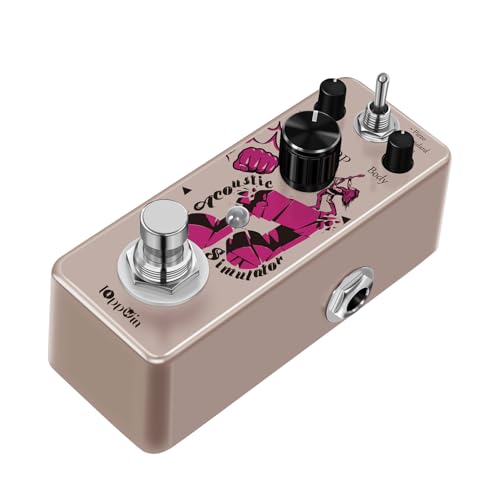
- Three voicings: Piezo, Standard, and Jumbo
- Analog-style tone with true bypass
- Compact metal housing for stage use
Best For: Guitarists who want simple, believable acoustic-style tones from an electric guitar.
Best Budget Analog
Rowin Acoustic AC Stage Simulator Pedal

- Three acoustic voicings: Piezo, Standard, and Jumbo
- True bypass keeps your dry tone transparent when off
- Compact metal enclosure with pedalboard-friendly size
Best For: Players who want a low-cost, compact acoustic-style pedal for quick live switching.
Best Budget Tube Amp Sim
JOYO American Tube Amp Sim Pedal
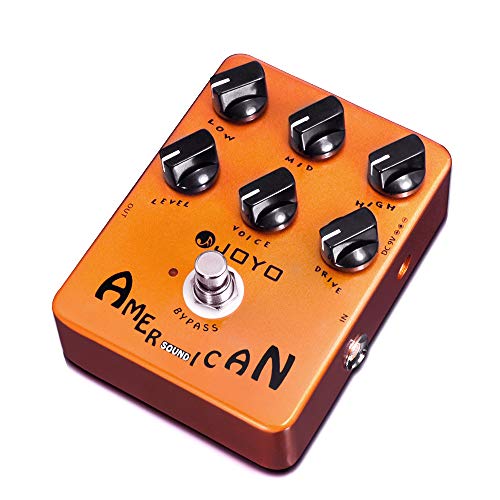
- Built-in cab simulation for direct tones
- Easy 6-knob control layout
- Compact, affordable, and pedalboard-friendly
Best For: Players who want a budget-friendly preamp and cab-sim pedal for practice, recording, or backup use.
Best for Versatile Acoustic Modeling – BOSS AC-3 Acoustic Simulator Pedal
If you want one of the most flexible acoustic simulator pedals for electric guitar, the BOSS AC-3 is built to cover multiple acoustic styles without taking up much pedalboard space. It adds built-in reverb and four distinct simulation modes, making it a practical choice for players who need a convincing acoustic tone onstage or in rehearsal.
Best For: Guitarists who want a compact, easy-to-use acoustic modeling pedal with several tone flavors for live switching.
Pros:
- Four simulation modes: standard, jumbo, enhanced, and piezo-equipped
- Built-in reverb tailored for acoustic-style tones
- Compact BOSS footprint that fits easily on most boards
- Good option for quick electric-to-acoustic conversion in live sets
Cons:
- Not a full replacement for a real acoustic guitar and pickup system
- Best results depend on dialing in your amp and EQ carefully
- May sound more convincing for some styles than others
As a practical live tool, the AC-3 stands out because it gives players multiple acoustic voicings instead of a single one-size-fits-all sound. If you’re comparing acoustic simulator pedals for electric guitar, this is a strong pick when flexibility and simplicity matter more than deep editing.
Best Value Mini Simulator – JOYO JF-323 Wooden Sound Acoustic Simulator
If you want one of the more affordable acoustic simulator pedals for electric guitar, the JOYO JF-323 is a compact way to add a convincing acoustic-style tone without changing instruments. Its simple four-knob layout makes it easy to shape the sound quickly, whether you’re dialing in a clean rhythm part or trying to sit better in a live mix.
Best For: Players who want a low-cost, easy-to-use acoustic simulation for quick live or recording changes.
Pros:
- Compact mini-pedal format that fits easily on crowded boards
- Four EQ-style controls for High, Mid, Bass, and Volume shaping
- True bypass and low 22mA current draw for practical pedalboard use
- Can get closer to an acoustic-through-PA feel than many thin-sounding simulators
Cons:
- Requires a 9V adapter, which is not included
- Best results may still need reverb or chorus to feel fully acoustic
- Not a full acoustic-guitar replacement for highly detailed studio work
For players comparing acoustic simulator pedals for electric guitar, this JOYO stands out more for value and usability than for deep editing or premium realism. It’s a smart pick if you want a fast, practical way to cover acoustic parts live without carrying an extra guitar.
Best for Direct Recording – SONICAKE Acoustic Guitar Effects Pedal
If you want one of the more practical acoustic simulator pedals for electric guitar, this SONICAKE unit is built around a straightforward acoustic-style signal chain with analog preamp, digital reverb, and useful feedback control. It’s aimed at players who need a cleaner, more mic-like tone shape on stage or into a recorder without adding a lot of setup complexity.
Best For: Guitarists who want an easy acoustic-style pedal with XLR output, anti-feedback tools, and a simple live/recording setup.
Pros:
- Analog preamp plus digital reverb helps add body and space to the tone.
- Notch filter and mute function make feedback control more manageable on stage.
- XLR balanced output is useful for direct connection to PA systems or recording rigs.
- High-impedance input and buffer bypass help keep the signal clean.
Cons:
- Requires a separate 9V center-negative power supply, which is not included.
- Less of a full acoustic-modeling solution than more advanced multi-effect units.
For players comparing acoustic simulator pedals for electric guitar, this SONICAKE model makes sense when the priority is direct output, feedback control, and a simple footprint rather than deep tone editing. It’s a solid fit for practical gigging and rehearsal use.
Best for Simple Acoustic Tones – MOOER Acoustikar Acoustic Guitar Pedal Simulator
If you want one of the more straightforward acoustic simulator pedals for electric guitar, the MOOER Acoustikar is built to add a convincing acoustic-style texture without complicating your setup. Its 3-mode voice options make it easy to shape a more natural piezo, standard, or jumbo-style response for different songs and rigs.
Best For: Players who need a compact, easy-to-use pedal for approximating acoustic guitar tones on an electric guitar during live sets or practice.
Pros:
- Three voice modes let you tailor the acoustic character to the part you’re playing
- Compact format is easy to place on a crowded pedalboard
- Designed to restore a warmer, more natural acoustic-style sound
Cons:
- It is a simulator, so it will not fully replace a real acoustic guitar
- Best results depend on your amp, EQ, and playing style
For players comparing acoustic simulator pedals for electric guitar, the Acoustikar stands out as a practical, no-fuss option that focuses on quick access to usable acoustic textures rather than deep editing. It is a solid choice if you want a simple effect that helps an electric guitar sit closer to an acoustic sound in a mix.
Best Multi-Effect Value – SONICAKE Matribox Multi Effects Processor
If you want one pedal that can cover more than just acoustic tones, the SONICAKE Matribox is a flexible option to consider for acoustic simulator pedals for electric guitar. It combines acoustic-style effects, amp modeling, IR cabinet simulation, and an expression pedal in a single compact unit, making it useful for players who need broad coverage for practice, recording, or live switching.
Best For: Guitarists who want an affordable all-in-one multi-effects unit with usable acoustic simulation, amp tones, and recording features.
Pros:
- 130 built-in effects include guitar, bass, and acoustic options
- 40 amp models and 38 IR cabinets add plenty of tone-shaping range
- USB audio interface and OTG support make home recording easier
- Expression pedal, looper, and drum rhythms boost practice flexibility
Cons:
- Not a dedicated acoustic simulator, so setup is less focused than a niche pedal
- Menus and presets may take time to learn
- Best results depend on dialing in the right amp and IR pairing
For players comparing acoustic simulator pedals for electric guitar, the Matribox stands out more as a do-everything processor than a single-purpose acoustic emulator. That makes it a strong pick if you want one unit that can handle acoustic-ish tones and a much wider range of sounds without buying separate pedals.
Best for Natural Analog Tones – Acoustic Guitar Simulator Pedal
If you want one of the more straightforward acoustic simulator pedals for electric guitar, this model focuses on realistic, amp-like acoustic textures without leaning heavily on digital processing. The 3 cabinet modes make it easy to tailor the voice from bright piezo snap to fuller jumbo-style warmth, so it can cover worship, pop rhythm parts, and quick live changes with less fuss.
Best For: Players who want a compact, analog-feeling electric-to-acoustic conversion pedal with simple tone-shaping options for stage or practice.
Pros:
- 3 useful voicings: Piezo, Standard, and Jumbo
- Analog-style response for a more organic acoustic character
- True bypass and compact metal housing for pedalboard-friendly use
- Designed for realistic electric-to-acoustic conversion
Cons:
- No deep editing or advanced EQ controls
- Voice options are simple compared with multi-effect modelers
- May work best for basic acoustic emulation rather than studio-critical realism
This is a practical pick if you value simple controls, durable construction, and a believable acoustic flavor over feature-heavy processing. For players comparing acoustic simulator pedals for electric guitar, it stands out as a clean, no-nonsense option for getting usable acoustic tones fast.
Best Portable Multi-Effects – SONICAKE Pocket Master Pedal
If you want one compact unit that can cover practice, recording, and direct-to-device use, the SONICAKE Pocket Master is worth a look among acoustic simulator pedals for electric guitar. It combines acoustic effects, amp modeling, IR cabinet simulation, and USB audio interface features in a pocket-sized design, so you can travel light without giving up flexibility.
Best For: Guitarists who want a portable all-in-one pedal for acoustic-style tones, amp modeling, and quick home recording.
Pros:
- 100+ built-in effects plus 20 amp models give it broad tone-shaping range
- Supports 3rd-party IRs, which helps you build more convincing custom sounds
- USB OTG and stereo audio streaming make it useful for mobile recording and practice
- Rechargeable battery and compact footprint are great for players on the go
Cons:
- Not a dedicated acoustic simulator, so the acoustic sounds are only part of a larger multi-effects set
- Complex feature set may take time to learn
- Best results will depend on tweaking presets and IRs
For players comparing acoustic simulator pedals for electric guitar, this is a strong value if you want more than just one acoustic-style patch. It is better suited to musicians who need versatility and portability than to someone seeking a simple, single-purpose acoustic emulator.
Best Budget Analog – Rowin Acoustic AC Stage Simulator Pedal
The Rowin Acoustic AC Stage is a practical choice if you want acoustic simulator pedals for electric guitar without paying for a larger multi-effects unit. Its three voicings let you move between Piezo, Standard, and Jumbo-style sounds, while the true-bypass design keeps your dry signal transparent when the pedal is off.
Best For: Players who need an affordable, compact acoustic-style pedal for quick live changes or home practice.
Pros:
- Three useful acoustic voicings: Piezo, Standard, and Jumbo
- True bypass helps preserve your core guitar tone when disengaged
- Compact zinc-alloy build fits easily on crowded pedalboards
- Can also work well with other electric instruments, like violin
Cons:
- 9V power adapter is not included
- No advanced EQ or blend controls for fine-tuning the sound
- Best results will depend on amp settings and the source guitar
If you want a simple, inexpensive way to cover acoustic parts, this Rowin pedal does the core job well. Among acoustic simulator pedals for electric guitar, it stands out for its straightforward mode selection and small footprint rather than deep editing features.
Best Budget Tube Amp Sim – JOYO American Tube Amp Sim Pedal
If you want an affordable way to shape direct tones, the JOYO American Tube Amp Simulator & Preamp is a practical entry point among acoustic simulator pedals for electric guitar-style direct rigs. Its 6-knob layout and built-in cab sim make it easy to dial in a more amp-like sound without a complicated setup.
Best For: Players who want a low-cost preamp and cab-sim pedal for direct recording, practice, or backup board duty.
Pros:
- Built-in cabinet simulation helps smooth out direct-output tones
- Simple 6-knob control layout makes quick tone shaping easy
- Compact and affordable, so it fits small pedalboards well
- Works as both a preamp and tone-shaping utility pedal
Cons:
- Not the most feature-rich option for advanced users
- Can require some tweaking to find the sweet spot with different rigs
- Best results depend on how well it pairs with your amp or interface
For players comparing acoustic simulator pedals for electric guitar applications, this JOYO pedal stands out more as a value-oriented direct-tone tool than a specialized boutique solution. It’s a sensible pick if you want cab-sim convenience, straightforward controls, and a budget-friendly way to clean up your signal path.
Best for British Rock Tones – JOYO British Rock Amp Sim Preamp
If you want one of the more affordable acoustic simulator pedals for electric guitar that can also double as a direct-recording preamp, the JOYO AC Tone is a strong fit. It aims at classic British-style chime and crunch, with enough EQ control to move from clean shimmer to thick overdrive while staying simple to dial in.
Best For: Players who want British-voiced amp sim tones, direct PA/interface output, and a budget-friendly pedal for practice, recording, or backup gig use.
Pros:
- Built-in cab simulation makes it easy to run straight into a mixer or audio interface
- 6-knob layout gives useful control over drive, voice, and 3-band EQ
- Compact aluminum housing feels road-ready for pedalboard use
- Good value for players chasing classic British amp character
Cons:
- Voicing is more amp-sim than true acoustic simulation
- Noise performance can depend on using a solid regulated 9V power supply
For guitarists comparing acoustic simulator pedals for electric guitar, the JOYO AC Tone stands out more as a British-flavored preamp and cab sim than a pure acoustic emulation tool. That makes it especially appealing if you want direct-recording convenience and vintage-inspired rock tone in one inexpensive pedal.
How We Picked the Best Acoustic Simulator Pedals for Electric Guitar
We prioritized tone realism, output flexibility, control layout, build quality, and how well each pedal fits real-world live and home-studio use. For Acoustic Simulator Pedals for Electric Guitar, the biggest difference is whether the pedal sounds naturally “acoustic” in a full mix, not just soloed at bedroom volume.
We also looked at whether a pedal is dedicated to acoustic simulation or part of a larger multi-effects platform, since that changes convenience, editing depth, and overall value.
Quick Comparison
If you want the simplest path to an acoustic-style sound, a dedicated simulator is usually the best bet. If you need multiple tones, amp models, or recording tools in one unit, a multi-effects processor may make more sense. Cabinet-style voicings, EQ, and direct-output options are especially important if you plan to run straight to a mixer or interface.
Key Buying Factors for Acoustic Simulator Pedals for Electric Guitar
Tone Voicing
Look for pedals that offer more than one acoustic character, such as piezo, standard, or jumbo voicings. These modes help you match the pedal to different songs and pickup styles.
EQ and Preamp Control
Good acoustic simulation usually depends on shaping harsh mids, taming piezo-like quack, and adding brightness without making the tone brittle. Simple EQ controls can be more useful than a long menu of effects.
Direct Output and Connectivity
If you play live or record direct, features like XLR output, cab simulation, or balanced connections can make setup easier and improve consistency.
Bypass and Noise Performance
True bypass, low noise, and stable switching matter when the pedal is part of a pedalboard. A noisy simulator can be distracting even if the tone is good.
Form Factor
Compact pedals suit small boards and quick swaps, while multi-effects units are better for players who want acoustic simulation alongside modulation, amp modeling, and IR loading.
Who Should Buy Which Acoustic Simulator Pedals for Electric Guitar?
Choose a dedicated acoustic simulator if you mainly need one convincing acoustic sound for live covers, worship sets, or studio overdubs. Choose a multi-effects unit if you want acoustic simulation plus broader guitar processing in the same box. Budget buyers should focus on straightforward controls and usable voicings, while players with direct-to-PA needs should prioritize pedals with stronger output and routing options.