The right keyboard stand can make a live setup faster, steadier, and more comfortable. This roundup compares 10 options across portable X-style designs, heavy-duty Z-style frames, platform stands, and two-tier configurations.
Whether you play a compact 61-key synthesizer or a full-size digital piano, prioritize stability, adjustability, transportability, and compatibility with your stage workflow.
Best 10 Keyboard Stands for Live Performances Picks for 2026
Best Rolling Stand
Liquid Stands Z-Style Keyboard Stand

- 250-pound load capacity
- Wheels and anchoring straps included
- Adjustable for seated or standing play
Best For: Mobile performers needing heavy-duty support
Best Two-Tier Setup
Harmony Audio Double Keyboard Stand

- Two levels for dual keyboards
- Integrated 5/8-inch mic mount
- 176-pound load capacity
Best For: Keyboardists building a multi-instrument rig
Best Platform Stand
On-Stage KS7150 Keyboard Stand

- 230-pound load capacity
- Independently adjustable legs
- Cable-routing ports and rubber feet
Best For: Large keyboards and heavy stage equipment
Best Quick-Setup Stand
RockJam Xfinity Double X Stand
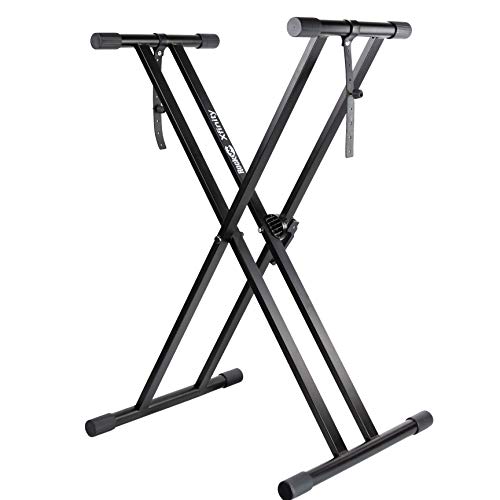
- Arrives pre-assembled
- Adjusts from about 4 to 38 inches
- Safety lock and straps included
Best For: Beginners and performers needing fast setup
Heavy-Duty Z-Stand
Pyle PKST2TZ Two-Tier Keyboard Stand
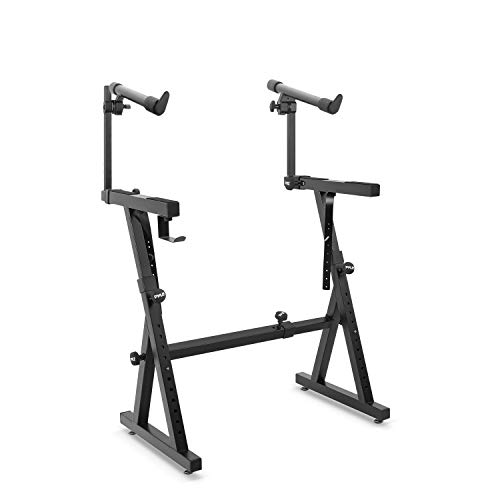
- 400-pound stated load capacity
- Adjustable, removable second tier
- Folds compactly for transport
Best For: Two-keyboard stage setups needing a sturdy, portable frame
Performance Bundle
Tipatyard Double-X Keyboard Stand and Bench

- Includes stand and adjustable bench
- Seven stand and four bench heights
- Locking straps and non-slip caps
Best For: 54- to 61-key players wanting a complete portable setup
Professional Double Rig
On-Stage KS7365EJ Folding-Z Keyboard Stand

- 400-pound main-platform capacity
- 60-pound second-tier capacity
- Tool-free disassembly and wide adjustments
Best For: Two-keyboard performers prioritizing stability and adjustability
Travel-Ready Z-Frame Pick
Pyle Heavy Duty Folding Keyboard Stand

- Adjusts from 20 to 34 inches in height
- Foam-padded arms help prevent slipping
- Folds flat for transport and storage
Best For: Mobile performers using 54- to 88-key keyboards
Heavy-Duty Stage Choice
Liquid Stands Z-Style Keyboard Stand

- Supports up to 250 pounds
- Includes anchoring straps and a headphone hook
- Adjusts for seated or standing performance
Best For: Gigging players who prioritize stability and high load capacity
Two-Tier Performance Workstation
AxcessAbles Dual Keyboard Stand with 2nd Tier

- Adds a second tier 10 inches higher
- Includes portable tabletops for devices or sheet music
- Supports up to 180 pounds of gear
Best For: Multi-device performers and producers with layered live setups
Best Rolling Stand – Liquid Stands Z-Style Keyboard Stand
For keyboard stands for live performances, the Liquid Stands Z-style model is a practical choice when you need heavy-duty support, rolling mobility, and flexible positioning. Its adjustable height and width accommodate many 54- to 88-key keyboards and other equipment.
Best For: Performers who need a sturdy, wheeled stand that works for seated or standing play.
Pros:
- Supports up to 250 pounds and offers a more stable Z-style design.
- Adjusts from 22.5 to 33.5 inches in height and width.
- Includes wheels, anchoring straps, anti-skid pads, and a headphone hook.
- Sets up in under a minute and packs flat for transport.
Cons:
- Its 7.31-kilogram weight may be less convenient than lighter portable stands.
- The single-level layout is intended for one keyboard or gear platform.
With strong load capacity, useful included accessories, and quick adjustment, this stand is well suited to musicians moving between home, studio, and stage setups.
Best Two-Tier Setup – Harmony Audio Double Keyboard Stand
Among keyboard stands for live performances, the Harmony Audio Double Keyboard Stand stands out for musicians who want two playing levels and a convenient microphone mounting point. Its column-style structure provides a spacious alternative to a typical X stand.
Best For: Live players and studio users running two keyboards, synths, or digital pianos.
Pros:
- Two-tier design accommodates dual instruments or synths.
- Integrated 5/8-inch mic mount keeps a microphone within reach.
- Aluminum construction and a stated 176-pound load capacity support a substantial rig.
- Column layout provides a spacious playing setup.
Cons:
- Its 51-inch length may require more storage and transport space.
- The supplied notes do not specify folding capability or height adjustment.
- It is designed around a two-level setup rather than a simple single-keyboard configuration.
This stand makes the most sense when your performance setup includes multiple keyboards and you value built-in microphone support over compact storage.
Best Platform Stand – On-Stage KS7150 Keyboard Stand
The On-Stage KS7150 is a strong option for keyboard stands for live performances when you want a broad, table-style platform. Adjustable width and height let it support keyboards, organs, synths, mixers, and other larger equipment while helping maintain a level setup.
Best For: Performers and studios using large or heavy keyboards, mixers, and controllers.
Pros:
- Supports equipment weighing up to 230 pounds.
- Adjustable width helps fit instruments and distribute weight.
- Each leg adjusts independently for uneven surfaces.
- Rubber feet help prevent skids, while platform ports support cable routing.
Cons:
- The platform-style design may take more floor space than a minimal X stand.
- It is a single-level stand without wheels listed in the supplied details.
- Its 7.3-kilogram weight may add to transport effort.
With high capacity, leveling adjustments, and cable-management ports, the KS7150 is a dependable choice for substantial stage or studio equipment.
Best Quick-Setup Stand – RockJam Xfinity Double X Stand
For keyboard stands for live performances, the RockJam Xfinity is convenient when fast setup matters. It arrives pre-assembled, unfolds without screws, and offers a wide height range for seated players, standing adults, lessons, and stage use.
Best For: Beginners, teachers, and performers who prioritize simple setup and broad height adjustment.
Pros:
- Pre-assembled design unfolds and locks without complicated installation.
- Adjusts from approximately 4 to 38 inches.
- Safety lock, securing straps, and nonslip rubber caps add stability.
- Reinforced double-X steel construction is suitable for home, studio, and stage use.
Cons:
- The stated 45-pound load capacity is lower than the other stands in this roundup.
- The X-style frame offers a single keyboard level.
- The supplied details do not list wheels or a two-tier configuration.
This is a straightforward, portable-feeling option for lighter full-size digital pianos and keyboards, especially when you want to unfold and play with minimal preparation.
Heavy-Duty Z-Stand – Pyle PKST2TZ Two-Tier Keyboard Stand
For keyboard stands for live performances, the Pyle PKST2TZ is a practical choice when you need a sturdy Z-style platform with room for two keyboards. Its adjustable second tier and compact folding design make it suitable for stages, rehearsals, and transport.
Best For: Performers who need a heavy-duty, two-keyboard setup that folds down for storage and transportation.
Pros:
- Supports up to 400 pounds on its heavy-duty platform.
- Removable second tier has independent height, depth, and tilt adjustments.
- Folds into a compact Z shape and can be set up or broken down in under a minute.
Cons:
- The second tier adds setup considerations compared with a basic single-tier stand.
- Its 3-pound listed item weight may warrant checking the product configuration before transport.
The PKST2TZ stands out for its high stated load capacity and flexible two-tier layout. It is a strong fit for musicians who prioritize stability and multi-keyboard access over the simplest possible stand.
Performance Bundle – Tipatyard Double-X Keyboard Stand and Bench
This keyboard stand and bench set is useful for live performances when you want both instrument support and a matching seat in one package. The double-X stand offers seven height settings, while the bench provides four height adjustments for different playing positions.
Best For: Players using 54- to 61-key electric pianos who want a portable stand-and-bench setup for performances, rehearsals, or studio use.
Pros:
- Includes both an adjustable keyboard stand and PU leather bench.
- Folds flat for load-in, teardown, and compact storage.
- Locking straps and non-slip caps help keep the keyboard and stand in place.
- Powder-coated steel construction is designed for long-term use.
Cons:
- The stated fit is limited to 54- to 61-key electric pianos.
- A double-X frame may offer less under-keyboard legroom than a Z-style design.
For musicians who need a complete playing station, this bundle adds convenience without requiring a separate bench purchase. Its adjustable, foldable design is especially practical for mobile performances and rehearsals.
Professional Double Rig – On-Stage KS7365EJ Folding-Z Keyboard Stand
The On-Stage KS7365EJ is designed for keyboard stands for live performances where two instruments need to share one footprint. Its Folding-Z frame supports a heavy main keyboard, while the second tier provides an elevated position for a lighter synthesizer or controller.
Best For: Gigging keyboardists who need a robust two-tier rig with broad width and height adjustment.
Pros:
- Main stand supports up to 400 pounds, while the second tier supports up to 60 pounds.
- Main height adjusts from 23.5 to 36.5 inches.
- Width adjusts from 21 to 36 inches to accommodate different keyboards.
- Disassembles quickly without tools for storage and transport.
Cons:
- At 29.5 pounds, it is heavier than many basic portable keyboard stands.
- The second tier is intended for lighter equipment than the main platform.
This stand is a compelling choice for demanding stage setups because it combines a high-capacity main platform with useful two-tier flexibility. Its heavier build favors stability and performance capability over minimum carry weight.
Travel-Ready Z-Frame Pick – Pyle Heavy Duty Folding Keyboard Stand
For keyboard stands for live performances, the Pyle PKST38.5 offers a practical balance of adjustability and portability. Its reinforced Z-shaped frame accommodates 54- to 88-key instruments, while the folding design makes transport and storage straightforward.
Best For: Performers who need a compact, height- and width-adjustable stand for stage, classroom, studio, or travel use.
Pros:
- Infinitely adjustable width and height between 20 and 34 inches.
- Foam-padded arms help reduce keyboard slippage and surface scratches.
- Folds into a compact Z shape and reportedly sets up in under a minute.
- Stability lock mechanism supports secure keyboard placement.
Cons:
- Its listed 85-pound load capacity is lower than some heavy-duty alternatives.
- It has a single level, so it is not designed for a second keyboard or elevated laptop tier.
The Pyle is a sensible choice when fast setup and easy transport matter most. Its single-tier layout keeps the design simple, while the padded supports and flexible sizing suit a broad range of standard keyboards.
Heavy-Duty Stage Choice – Liquid Stands Z-Style Keyboard Stand
Among keyboard stands for live performances, the Liquid Stands Z-style model stands out for its high stated capacity and included securing accessories. It adjusts for seated or standing play and folds flat for transport to gigs.
Best For: Gigging musicians who want a sturdy, adjustable stand with anchoring straps, a headphone hook, and support for heavier keyboards or gear.
Pros:
- Supports up to 250 pounds according to the supplied specifications.
- Height adjusts from 22.5 to 33.5 inches, with adjustable width for compatible setups.
- Includes two anchoring straps, anti-skid foam pads, four adjustable feet, and a headphone hook.
- Designed for setup and breakdown in under a minute.
Cons:
- The stand weighs 7 kg, making it heavier to carry than lighter folding options.
- Height and width adjust in set increments rather than continuously.
The Liquid Stands model is a strong fit for performers prioritizing stability and load capacity. Its accessories add useful stage practicality, although the heavier construction may be less appealing for musicians who travel with minimal gear.
Two-Tier Performance Workstation – AxcessAbles Dual Keyboard Stand with 2nd Tier
For keyboard stands for live performances that need to hold more than one piece of equipment, the AxcessAbles dual stand adds a second tier and attachable tabletops. Its layout can accommodate a primary keyboard plus a laptop, tablet, sheet music, compact keyboard, or other gear.
Best For: Performers and producers who need a two-level setup for keyboards, synths, laptops, mixers, or performance accessories.
Pros:
- Two-tier design places the upper tier 10 inches higher for easier access to secondary equipment.
- Portable tabletops can hold sheet music, tablets, laptops, or additional equipment.
- Heavy-duty metal construction has a stated 180-pound capacity.
- Folds for transport and offers a versatile workstation-style setup.
Cons:
- At 39 pounds in the supplied notes, it is substantially heavier than basic single-tier stands.
- The two-tier configuration may be more equipment than needed for a simple keyboard-only setup.
- The supplied notes do not specify adjustment ranges for the tiers.
The AxcessAbles is the most flexible option here for layered live rigs. Its elevated second tier and tabletops can reduce the need for separate accessories, but the expanded design and weight favor gear-heavy performances over minimalist setups.
How We Picked the Best Keyboard Stands for Live Performances
We focused on stands suited to rehearsals, gigs, worship services, events, and touring setups. The selected models represent several common designs and price points, including folding X stands, Z-style frames, platform stands, and multi-tier systems. We considered stated weight capacity, height and width adjustment, portability, setup convenience, accessory support, and whether each stand can accommodate different keyboard sizes.
Because manufacturer specifications and real-world stability can vary, treat maximum load ratings as limits rather than targets. Your keyboard’s dimensions, weight distribution, and playing style should guide the final choice.
Quick Comparison
- Best for simple portability: Folding X-style stands are usually quick to set up, easy to store, and suitable for lighter keyboards.
- Best for stability: Z-style and platform stands generally provide a broader, more substantial base for heavier instruments.
- Best for layered rigs: Two-tier stands let you position a second keyboard, controller, laptop, or tablet above the primary instrument.
- Best for complete setups: A keyboard stand and bench set can simplify buying, especially for home practice and performances.
Key Buying Factors for Keyboard Stands for Live Performances
Stability and Weight Capacity
Choose a frame rated comfortably above the keyboard’s weight. Wider bases, reinforced joints, locking mechanisms, and non-slip feet can help reduce movement during energetic playing. A stand that is technically strong but poorly adjusted may still wobble, so check that all knobs, braces, and locks are secure before performing.
Height and Width Adjustment
Look for enough adjustment range to support seated or standing performance. Width compatibility matters just as much: confirm that the arms or platform fit your keyboard without obstructing controls, speakers, pedals, or ventilation.
Portability and Setup
For frequent gigs, folded dimensions, carrying weight, wheels, and setup speed can matter more than maximum capacity. A heavier stand may be worthwhile for a permanent or semi-permanent rig, while a folding model is often better for musicians carrying equipment between venues.
Tier Design and Accessories
A second tier is useful when you play multiple keyboards or need space for a controller, laptop, or tablet. Check the tier’s height, depth, angle adjustment, and stated capacity. Mic mounts and cable-management features can also reduce clutter, but make sure added accessories do not compromise balance.
Who Should Buy Which Keyboard Stands for Live Performances?
Solo gigging musicians should look for a stable stand that folds quickly and fits their vehicle or carrying routine. Keyboardists with layered sounds should consider a two-tier model, particularly if they need a second instrument or controller within easy reach. Players using heavy digital pianos or organs will generally benefit from a reinforced Z-style or platform design with a generous capacity rating. Home players and students may prefer an adjustable stand-and-bench set for an all-in-one solution. Finally, performers with changing venues should prioritize locking adjustments, durable construction, and a setup that can be checked quickly before each show.