Touring puts more stress on a guitar bag than occasional rehearsals or local gigs. Frequent loading, crowded vans, changing weather, and long walks between venues all demand dependable protection and comfortable carrying.
We selected 10 guitar gig bags for touring musicians across acoustic, electric, and bass setups, with attention to padding, weather resistance, storage, fit, and everyday portability.
Best 10 Guitar Gig Bags for Touring Musicians Picks for 2026
Lightweight Acoustic Essential
CAHAYA 41-In Acoustic Guitar Bag

- 0.35-inch padded acoustic gig bag
- Backpack straps and two handles
- Two accessory pouches plus hanging loop
Best For: Lightweight acoustic transport and everyday gigs
Professional Electric Protection
D'Addario Backline Electric Guitar Gig Bag

- Shock-absorbing protection with reinforced zippers
- Detachable Auto Lock accessory bag
- Optional Humidipak neck cradle
Best For: Electric guitar touring and demanding transport
Maximum Storage Acoustic Bag
CAHAYA 40/41/42-In Guitar Case
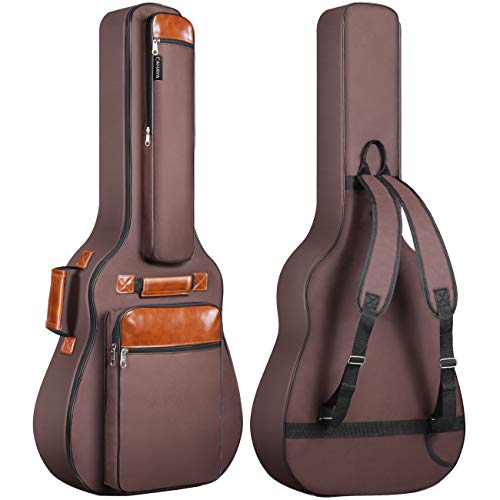
- 0.5-inch sponge padding and shockproof base
- Six exterior storage pockets
- Backpack and hand-carry options
Best For: Acoustic or classical players carrying many accessories
Touring Bass Protection
D'Addario Backline Bass Guitar Gig Bag

- Bass-specific reinforced protective design
- Optional Humidipak neck cradle
- Detachable Auto Lock accessory bag
Best For: Bass touring and frequent professional transport
Flexible Tour Companion
LETSROCK Electric Guitar Gig Bag

- 0.7-inch padded, three-layer construction
- Backpack, shoulder, and side-handle carry options
- Three pockets for accessories and sheet music
Best For: Full-size electric guitar players who value flexible carrying and organized storage
Heavy-Duty Weather-Ready Pick
GHOSTFIRE Super Thick Guitar Gig Bag

- 0.8-inch EVA padding with reinforced structure
- Supports ST/TL/LP/SG guitar shapes
- Splash-resistant fabric and oversized storage
Best For: Touring players seeking robust protection and broad electric-guitar compatibility
Lightweight Everyday Workhorse
Gator GBE-ELECT Electric Gig Bag

- 10mm internal foam padding
- Fits Stratocaster and Telecaster styles up to 40.3 inches
- 1.5-pound nylon design with backpack straps
Best For: Players wanting a lightweight, simple bag for Strat- and Tele-style guitars
Rugged Carry Pick
LETSROCK Padded Electric Guitar Bag

- 0.35-inch padding with waterproof 600D exterior
- Backpack straps and reinforced grip handles
- Large pocket plus neck strap and shockproof base
Best For: Touring electric guitarists needing weather-resistant padding and flexible carry options
Lightweight Travel Pick
Wayfinder Standard Electric Gig Bag

- Lightweight 1.1-pound nylon construction
- Padded interior for scratches and minor impacts
- Backpack straps and spacious zippered pocket
Best For: Players carrying standard electric guitars to rehearsals and local gigs
Organized Protection Pick
CAHAYA 0.35-Inch Electric Guitar Bag
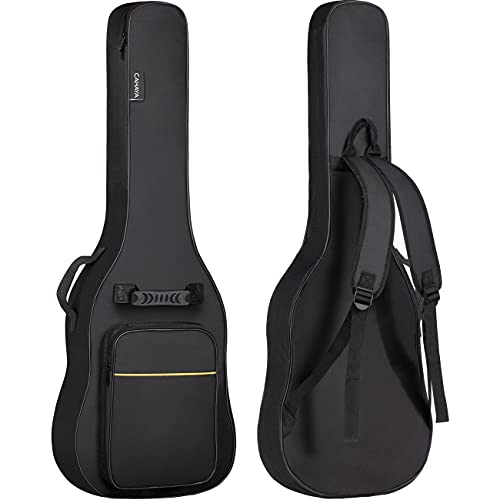
- 6mm padding with water-resistant fabric
- Large utility pocket for music and accessories
- Backpack straps, handles, neck strap, and rubber base
Best For: 40-inch electric guitar players needing storage for travel essentials
Lightweight Acoustic Essential – CAHAYA 41-In Acoustic Guitar Bag
For guitar gig bags for touring musicians, the CAHAYA CY0152 is a lightweight acoustic option with 0.35-inch padding, a water-resistant 600D Oxford cloth exterior, and backpack-style carrying. Its 39-, 40-, and 41-inch compatibility makes it practical for everyday transport and lighter touring use.
Best For: Acoustic guitarists who want a light, affordable bag with basic padding, rain resistance, and accessory storage.
Pros:
- 0.35-inch padding and a shockproof bottom help protect against bumps.
- Dual adjustable shoulder straps support backpack carrying, while two handles offer alternatives.
- Two exterior pouches accommodate sheet music, cables, tuners, pedals, and other accessories.
- Two-way metal zipper and rear hanging loop add practical convenience.
Cons:
- Its 0.35-inch padding provides less cushioning than the thicker CAHAYA option in this roundup.
- The design is intended for acoustic guitars rather than electric guitars or basses.
At 1.4 pounds, this is a notably portable choice when minimizing carry weight matters. It offers useful organization and everyday protection, but musicians needing heavier-duty touring security may prefer a more reinforced bag.
Professional Electric Protection – D'Addario Backline Electric Guitar Gig Bag
Among guitar gig bags for touring musicians, the D’Addario Backline Electric Guitar Gig Bag is built for demanding travel. It combines shock-absorbing padding, reinforced and covered zippers, headstock and bridge impact protection, and a rugged water-resistant exterior.
Best For: Electric guitarists who need reinforced protection, organized gear storage, and comfortable carrying for touring, rehearsals, and daily transport.
Pros:
- Strategic impact protection and shock-absorbing padding provide substantial instrument security.
- The removable breakaway gear bag uses Auto Lock technology to secure accessories.
- An integrated Humidipak neck cradle supports optional two-way humidity control; Humidipak is sold separately.
- Padded backpack straps and a reinforced handle support flexible carrying.
Cons:
- At 6.1 pounds, it is considerably heavier than a basic soft gig bag.
- Humidity-control functionality requires purchasing Humidipak separately.
The Backline prioritizes protection and organization over minimum weight. Its reinforced construction and detachable accessory storage make it a strong fit for serious electric guitar travel without the bulk of a hard case.
Maximum Storage Acoustic Bag – CAHAYA 40/41/42-In Guitar Case
For guitar gig bags for touring musicians who carry plenty of extras, the CAHAYA CY0150 stands out with 0.5-inch sponge padding and six exterior pockets. Its water-resistant Oxford fabric, adjustable straps, and rubber shockproof base support practical acoustic or classical guitar transport.
Best For: Acoustic and classical guitarists who need thicker padding and extensive storage for sheet music, strings, tuners, picks, and other accessories.
Pros:
- 0.5-inch sponge padding and a rubber shockproof base add protection during transport.
- Six exterior pockets provide more organization than a typical basic gig bag.
- Adjustable shoulder straps allow backpack carrying, while the handle supports short trips.
- Water-resistant Oxford fabric is designed for long-term practical use.
Cons:
- The listed 1.7-pound weight is higher than the lighter CAHAYA CY0152.
- It is designed for acoustic or classical guitars, not electric guitars or basses.
This model is a useful middle ground for musicians who want more cushioning and storage without moving to a hard case. Its six-pocket layout is especially convenient when one bag needs to carry both the instrument and common gig essentials.
Touring Bass Protection – D'Addario Backline Bass Guitar Gig Bag
For bassists comparing guitar gig bags for touring musicians, the D’Addario Backline Bass Guitar Gig Bag offers purpose-built protection without the bulk of a hard case. It features shock-absorbing padding, reinforced zippers, covered zipper tracks, and impact protection around the headstock and bridge.
Best For: Bass players who need a rugged, water-resistant bag with climate-control support and organized accessory storage for touring and frequent transport.
Pros:
- Reinforced construction, durable hardware, and plush tear-resistant interior support regular travel.
- The integrated Humidipak neck cradle enables optional two-way humidity control; Humidipak is sold separately.
- A detachable Auto Lock gear bag keeps cables, tuners, straps, and accessories organized.
- Padded shoulder straps and a hand strap provide carrying flexibility.
Cons:
- At 6.7 pounds, it is a heavier soft-case option.
- Humidipak climate-control functionality requires a separate purchase.
The Backline Bass model emphasizes protection, organization, and touring durability. Its heavier build may not suit players seeking the lightest possible carry, but it offers a more substantial alternative to a basic bass gig bag.
Flexible Tour Companion – LETSROCK Electric Guitar Gig Bag
For musicians comparing guitar gig bags for touring musicians, the LETSROCK offers a practical balance of padding, portability, and storage. Its three-layer build, 0.7-inch padding, neck strap, and reinforced zippers are suited to full-size ST, LP, and TELE-style electric guitars.
Best For: Players who need a versatile electric-guitar bag for rehearsals, local gigs, and longer trips.
Pros:
- 0.7-inch padding and a three-layer construction help absorb bumps and shocks.
- Convertible carrying setup includes an adjustable, removable shoulder strap, backpack mode, and side handle.
- Three pockets provide space for strings, picks, tuners, sheet music, and other essentials.
Cons:
- Designed for full-size electric guitars rather than acoustic or bass instruments.
- It has no wheels, so heavier touring loads must be carried.
The LETSROCK is a sensible choice when organized storage and flexible carrying matter more than hard-case protection or rolling transport.
Heavy-Duty Weather-Ready Pick – GHOSTFIRE Super Thick Guitar Gig Bag
Among guitar gig bags for touring musicians, the GHOSTFIRE stands out for its 0.8-inch EVA padding, reinforced structure, and splash-resistant Oxford fabric. It fits ST, TL, LP, and SG guitars while adding neck support and abrasion-resistant pads for frequent transport.
Best For: Touring electric-guitar players who want substantial impact protection, broad model compatibility, and generous accessory storage.
Pros:
- 0.8-inch EVA padding and an interior contour provide shock-absorbing protection.
- PE-board reinforcement, a durable handle, and six anti-slip wear pads support frequent handling.
- Neck pillow supports both flat-neck ST/TL and raised-neck LP/SG guitars.
- Large storage areas accommodate cables, books, straps, sheet music, and smaller tools.
Cons:
- Splash-resistant fabric is not intended for prolonged soaking.
- At 5 pounds, it is heavier than some lightweight gig bags.
The GHOSTFIRE is a strong touring-oriented option for players who prioritize structure and protection while still carrying their gear in a soft case.
Lightweight Everyday Workhorse – Gator GBE-ELECT Electric Gig Bag
For guitar gig bags for touring musicians who prefer a lighter carry, the Gator GBE-ELECT uses a nylon shell with 10mm internal foam padding. It fits Stratocaster- and Telecaster-style electric guitars up to 40.3 inches and includes reinforced headstock and bridge areas.
Best For: Stratocaster and Telecaster players who want a lightweight, straightforward bag for rehearsals and gigs.
Pros:
- Lightweight 1.5-pound design is easy to carry between venues.
- 10mm padding plus reinforced headstock and bridge areas add basic protection.
- Adjustable backpack straps and a spacious outer pocket improve everyday portability.
- Includes a two-year manufacturer warranty.
Cons:
- Its single-compartment design offers less organization than multi-pocket alternatives.
- It is sized specifically for Stratocaster and Telecaster-style guitars.
- Foam padding may offer less protection than thicker EVA-padded touring bags.
The Gator is a practical, economical-style solution for routine transport when low weight and simple backpack carry are higher priorities than maximum padding or extensive storage.
Rugged Carry Pick – LETSROCK Padded Electric Guitar Bag
For guitar gig bags for touring musicians, the LETSROCK offers substantial everyday protection and flexible carrying options. Its 0.35-inch padding, waterproof 600D exterior, shockproof rubber base, and backpack straps make it a practical choice for moving a 39-, 40-, or 41-inch electric guitar between rehearsals and gigs.
Best For: Electric guitarists who want padded, weather-resistant protection with backpack carry and generous storage.
Pros:
- 0.35-inch padding, smooth lining, and a shockproof rubber bottom help protect against bumps and scratches.
- Waterproof 600D textured oxford exterior is suited to unpredictable transport conditions.
- Large front pocket holds sheet music, books, a tablet, or smartphone.
- Adjustable backpack straps, silicone grip handles, and a wall-hanging loop provide versatile handling.
Cons:
- Designed for electric guitars rather than bass guitars or other instrument types.
- The relatively structured protective features may be more than needed for simple home storage.
Its neck strap, secure headstock area, and smooth two-way metal zipper add useful details for frequent loading and unloading. Compare the listed dimensions with your guitar before buying to confirm the fit.
Lightweight Travel Pick – Wayfinder Standard Electric Gig Bag
Among guitar gig bags for touring musicians, the Wayfinder emphasizes portability without omitting basic protection. Its rugged nylon exterior, padded interior, adjustable backpack straps, and large accessory pocket suit musicians carrying a standard electric guitar to rehearsals, lessons, and local performances.
Best For: Players seeking a lightweight bag for standard electric guitars such as Stratocaster- and Telecaster-style models.
Pros:
- Lightweight 1.1-pound design is convenient for musicians on the go.
- Soft padding and rugged nylon help guard against scratches and minor impacts.
- Adjustable backpack straps plus reinforced side and rear handles offer multiple carrying methods.
- Large zippered front pocket stores sheet music, strings, capos, tuners, and other small accessories.
Cons:
- Notes describe protection against minor impacts rather than heavy-duty impact protection.
- Only one compartment is listed, so larger touring loads may require additional storage.
- Fit should be checked against the supplied interior measurements for nonstandard guitar shapes.
The published 41-inch length and detailed bout measurements make fit comparison straightforward. A one-year manufacturer warranty is an added consideration for musicians who want basic coverage.
Organized Protection Pick – CAHAYA 0.35-Inch Electric Guitar Bag
For guitar gig bags for touring musicians, the CAHAYA combines 6mm padding with practical storage and several carry options. It is sized for 40-inch electric guitars and includes a neck strap, reinforced headstock area, metal zipper, and rubber base for day-to-day transport.
Best For: Electric guitarists who want a water-resistant, backpack-style case with room for music, cables, strings, and other essentials.
Pros:
- 6mm padding throughout helps defend against light-travel nicks, scuffs, and scratches.
- Large front pocket accommodates music, a tablet, tuner, strings, cables, picks, and straps.
- Dual adjustable backpack straps and two grip handles support flexible carrying.
- Neck strap, sturdy metal zipper, reinforced headstock cloth, and rubber base add useful protection.
Cons:
- It is too short for an electric bass guitar.
- Designed around basic storage and light-travel protection, not heavy-duty case-level protection.
- Fit is primarily specified for 40-inch electric guitars, so dimensions should be checked before purchase.
The wall-hanging loop is convenient between uses, while the two-year manufacturer warranty adds reassurance. Confirm your guitar’s length and bout measurements, especially if it has an unusual body shape.
How We Picked These Guitar Gig Bags for Touring Musicians
We focused on features that matter during repeated transport rather than choosing bags based only on appearance or price. The selection includes acoustic, electric, and bass models with different levels of padding, storage, climate protection, and carrying support. We also considered instrument compatibility, exterior materials, backpack-style straps, and the practical needs of musicians moving between home, rehearsal spaces, vehicles, and venues.
No soft gig bag replaces a hard case for checked airline baggage or severe impact exposure. However, the right padded bag can provide a useful balance of protection, weight, storage, and convenience for ground touring and regular gig work.
Quick Comparison
| Best For | What to Look For |
|---|---|
| Acoustic guitars | Correct body length, broad padding, neck support, and water-resistant fabric |
| Electric guitars | Secure internal fit, reinforced exterior, accessory storage, and comfortable straps |
| Bass guitars | Bass-specific dimensions, adequate length, thick padding, and strong handles |
| Heavy touring use | Thicker padding, durable zippers, reinforced seams, and reliable weather protection |
| Short trips and commuting | Lightweight construction, backpack straps, and compact accessory pockets |
Key Buying Factors
Fit and Instrument Compatibility
Check the listed length, body shape, and instrument type before ordering. An overly loose bag can let the guitar move during transport, while a tight fit may strain the finish or hardware. Electric, acoustic, classical, and bass guitars generally require different interior dimensions.
Padding and Impact Protection
Padding thickness is only one part of protection. Look for padding around the body, neck, headstock, and base, along with a secure neck cradle or retaining strap. Thicker foam is useful for crowded vehicles and frequent handling, but it usually adds weight and bulk.
Weather Resistance
Water-resistant or waterproof fabric helps protect against brief rain and accidental spills, but it does not necessarily make a bag fully weatherproof. A covered zipper, durable outer fabric, and a rain cover can be valuable for musicians walking between venues.
Storage and Carrying Comfort
Multiple pockets are helpful for cables, tuners, straps, sheet music, and small accessories. Adjustable backpack straps, padded handles, and balanced weight distribution become especially important on walking-heavy tour days.
Who Should Buy Which Guitar Gig Bags for Touring Musicians?
Choose a heavily padded model if your guitar regularly travels in vans, trailers, or busy backstage areas. A lighter bag is better for local commuting, rehearsals, and performers who prioritize easy carrying over maximum impact resistance. Acoustic players should verify body-style compatibility carefully, while electric guitarists should match the case to the instrument’s silhouette and overall length. Bassists should use a bass-specific model rather than assuming an electric-guitar bag will fit.
For airline travel, valuable vintage instruments, or situations involving significant impact risk, consider upgrading to a molded or hard-shell case. For everyday ground touring, prioritize the best combination of fit, padding, weather protection, and carrying comfort for your route.