A good string cutter makes restringing quicker and helps you trim sharp wire ends close to the tuning posts. But a compact dedicated cutter and an all-in-one winder solve slightly different problems.
These 10 options include music-specific cutters, general-purpose pliers, and multitools. The right choice depends on the strings you use, how often you change them, and whether you want one tool or a complete restringing kit.
Best 10 Guitar String Cutters Picks for 2026
Versatile Utility Pick

- General-purpose flush-cut snips
- Chrome-vanadium steel jaws
- Spring-loaded, non-slip grip
Best For: Players who also need small workshop snips
Gig-Bag Pick

- Compact 4.5-inch design
- Cuts all string types
- Non-slip comfort grips
Best For: Players wanting a dedicated case-ready cutter
Heavy-String Pick
Jim Dunlop Compact String Cutters

- Handles super-heavy bass strings
- Laser-cut cutting edge
- Compact gig-bag design
Best For: Players cutting heavier bass strings
All-in-One Pick
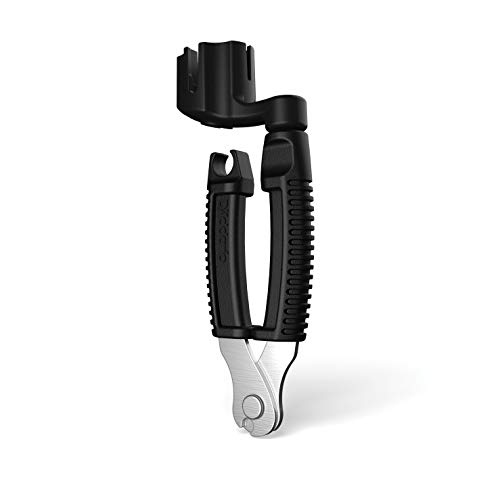
- Cutter, winder, and pin puller
- Hardened-steel clippers
- Works across multiple instrument types
Best For: Players wanting one tool for string changes
Heavy-Duty Wire Cutter
WORKPRO 6-Inch Diagonal Pliers

- Heat-treated 50CrV steel jaws
- Comfortable anti-slip handles
- General-purpose wire-cutting design
Best For: Players wanting a versatile cutter for strings and other wire
All-in-One String-Change Tool

- Built-in hardened-steel clippers
- Peg winder for quicker restringing
- Integrated acoustic bridge pin puller
Best For: Players wanting one tool for winding, cutting, and pin removal
Close-Trim String Cutter
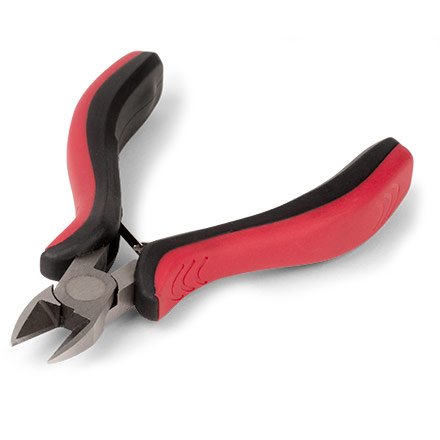
- Hardened jaws for guitar and bass strings
- Side-cutter access near tuning posts
- Non-slip grips and Lifetime Promise
Best For: Players prioritizing close, controlled string trims
Dedicated Cutter

- Dedicated guitar and bass string cutter
- 55# carbon-steel blade
- Rubber-coated soft-grip handle
Best For: Straightforward string trimming
Best Heavy-Duty Pick

- Winder, cutter, and bridge-pin puller
- Rubber-lined winder head
- Carbon-steel cutter for varied strings
Best For: Multi-instrument string changes
Expanded Tool Set

- Spring-loaded cutter with sheath
- Dual-bearing, rubber-lined winder
- Pin puller and 10mm wrench included
Best For: String changes with tuner-bushing upkeep
Versatile Utility Pick – 6-Inch Flush-Cut Wire Cutters
These 6-inch flush-cut snips are a general-purpose option among guitar string cutters. Their chrome-vanadium steel jaws are specified for copper and aluminum wire, while the compact, spring-loaded design makes them easy to handle.
Best For: Players who also want a cutter for wire, zip ties, and other small workshop tasks.
Pros:
- Extra-long cutting edge is rated for electrical wire up to 12 AWG.
- Compact size helps with work in tight spaces.
- Spring-loaded, non-slip handles are designed for a comfortable grip.
Cons:
- Not specifically marketed or rated for instrument strings.
- Its 6-inch size takes more case space than the compact string-cutter options here.
Choose these if multipurpose snips appeal to you, but consider a dedicated string cutter if instrument-string performance is your priority.
Gig-Bag Pick – MusicNomad GRIP String Cutter
For guitar string cutters you can keep close at hand, the MusicNomad GRIP combines a compact 4.5-inch design with a side-cutting head. It is made for guitar, bass, ukulele, and other stringed instruments.
Best For: Players who want a dedicated string cutter that fits in a gig bag or case.
Pros:
- Designed to cut all string types.
- Side-cutter layout lets you cut close.
- Non-slip TPR comfort grips and chrome-vanadium steel construction.
Cons:
- It only cuts; it does not include a peg winder or bridge-pin puller.
This is a focused choice for trimming strings without carrying a larger multipurpose tool.
Heavy-String Pick – Jim Dunlop Compact String Cutters
The Jim Dunlop DGT08 stands out among guitar string cutters for its stated ability to cut even super-heavy bass strings quickly and cleanly. Its compact design is intended to fit in a gig bag.
Best For: Bass players and guitarists who want a dedicated cutter for heavier strings.
Pros:
- Made from chromium-vanadium steel.
- Laser-cut edge is designed for strong, precise cuts.
- Specified to handle super-heavy bass strings.
Cons:
- No peg winder or bridge-pin puller is listed.
If thick strings are the main concern, the DGT08 offers a more directly supported choice than a general-purpose wire snip.
All-in-One Pick – D'Addario Pro-Winder
If you are comparing guitar string cutters for complete string changes, the D’Addario Pro-Winder adds a peg winder and bridge-pin puller to its built-in hardened-steel clippers. It is designed for use on virtually all electric and acoustic guitars, basses, banjos, and mandolins.
Best For: Players who would rather keep one string-change tool than three separate tools in their case.
Pros:
- Combines a string cutter, peg winder, and bridge-pin puller.
- Built-in clippers cut old strings and trim excess from new ones.
- Bridge-pin puller is useful for acoustic guitar string changes.
Cons:
- It is not a standalone pair of cutting pliers.
- Players who only need to trim strings may not use its additional features.
The Pro-Winder makes the most sense when faster winding and bridge-pin removal matter as much as cutting.
Heavy-Duty Wire Cutter – WORKPRO 6-Inch Diagonal Pliers
The WORKPRO 6-inch diagonal pliers are general-purpose wire cutters worth considering if you also want a tool for trimming guitar strings. Their heat-treated 50CrV steel jaws and ergonomic, anti-slip handles are designed for controlled cutting.
Best For: Players who want one cutter for guitar strings and other wire-cutting tasks.
Pros:
- Hardened cutting edges are designed to make wire cutting easier.
- Bi-material handles provide a comfortable, anti-slip grip.
- Protective coating and polished surfaces help resist corrosion.
Cons:
- A general-purpose cutter rather than a guitar-specific string tool.
- Requires wiping before use and dry storage, per the care instructions.
Choose this one for versatility; if close trimming at tuning posts is your main priority, a guitar-specific side cutter may be a better fit.
All-in-One String-Change Tool – D'Addario Pro-Winder White
Among guitar string cutters, the D’Addario Pro-Winder stands out by combining hardened-steel clippers with a peg winder and bridge pin puller. It puts three common string-change tasks into one hand-held tool.
Best For: Guitarists who want a single tool for winding, cutting, and pulling acoustic bridge pins.
Pros:
- Built-in clippers cut old strings and trim excess new string.
- Peg winder helps speed up winding at the tuning machines.
- Integrated pin puller helps remove acoustic bridge pins without using pliers.
Cons:
- The cutter is part of a multipurpose tool rather than a standalone pair of pliers.
- The bridge pin puller is most relevant to acoustic guitars with bridge pins.
This is the practical pick when faster restringing matters more than owning a dedicated cutter alone.
Close-Trim String Cutter – StewMac Comfort Grip Cutter
The StewMac Comfort Grip is a dedicated choice among guitar string cutters, with hardened steel jaws intended for acoustic, electric, and bass strings. Its side-cutter design is made to reach close to tuning posts when trimming excess string.
Best For: Players who want a dedicated cutter for close trims during string changes.
Pros:
- Hardened steel jaws are designed to cut acoustic, electric, and bass strings.
- Side-cutter shape reaches tight spaces near tuning posts.
- Ergonomic rubber grips offer a secure, non-slip hold.
- Backed by StewMac’s Lifetime Promise and expert support.
Cons:
- Does not include a peg winder or bridge pin puller.
For straightforward cutting and tidy trims at the tuning machines, this purpose-built tool keeps the focus on the job.
Dedicated Cutter – 6-Inch Diagonal String Pliers
If you want guitar string cutters without extra functions, these 6-inch diagonal pliers offer a straightforward option for trimming guitar and bass strings. The cutter has a carbon-steel blade and a blue, soft-grip handle.
Best For: Players who want a dedicated tool for cutting strings during changes.
Pros:
- Sharp diagonal blade is designed for neat string cuts.
- 55# carbon-steel construction.
- Rubber-coated handle provides a soft grip.
Cons:
- No winder or bridge-pin puller is included.
This is the simplest choice here: useful if cutting is the only job you need the tool to do, but less convenient if you also want help winding new strings.
Among guitar string cutters, the MusicNomad Grip ONE stands out by combining a carbon-steel cutter with a string winder and acoustic bridge-pin puller. Its rubber-lined winder head is designed to grip tuning pegs without scratching them, while a bearing supports smooth rotation.
Best For: Players who want one handheld tool for winding, cutting, and pulling acoustic bridge pins.
Pros:
- Combines three common string-changing tools.
- Rubber-lined, narrow winder head helps avoid contact with nearby pegs.
- Cutter is designed for string types both big and small.
- Ergonomic rubber grips.
Cons:
- Bridge-pin puller is mainly relevant to acoustic guitars.
- No 10mm tuning-bushing wrench is listed.
Choose the Grip ONE if you value a compact string-change workflow more than a dedicated pair of cutting pliers. Its pin puller adds the most value if an acoustic guitar is in your rotation.
The MusicNomad GRIP MN295 goes beyond basic guitar string cutters with a spring-loaded cutter, separate winder, bridge-pin puller, and 10mm wrench for compatible tuning-machine bushings. Its rubber-lined winder is designed for electric, acoustic, classical, and bass guitars.
Best For: Players who want separate string-changing tools plus a wrench for 10mm tuning-machine bushings.
Pros:
- Chrome-vanadium cutter handles strings from bass to small guitar gauges.
- Spring-loaded cutter includes a storage sheath.
- Dual-bearing winder has a rubber-lined head.
- Includes a metal-free acoustic bridge-pin puller and 10mm wrench.
Cons:
- The bridge-pin puller is not useful for guitars without bridge pins.
- The wrench is intended for popular 10mm bushings, not every tuner size.
This set makes sense when you want dedicated pieces for each step rather than a single combined tool. Check your tuner bushing size if the wrench is a deciding feature.
How We Picked These Guitar String Cutters
We considered the tools’ intended jobs, cutting format, handle design, portability, and added restringing functions. The selection includes dedicated music tools, general-purpose wire cutters, and combination tools so you can compare different approaches rather than just different handles. A tool’s inclusion does not mean every model has been independently tested on every string gauge or material; check the maker’s specifications if you use unusually heavy strings.
Quick Comparison: Which Type Fits Your Routine?
Dedicated string cutters keep cutting straightforward and may be easier to position near a tuning post. The MusicNomad GRIP MN226, Jim Dunlop DGT08, and StewMac Comfort Grip fit this category. Diagonal wire cutters, including the WORKPRO model and the two unbranded plier-style options, offer familiar full-size grips and can serve other light wire-cutting tasks when used within their ratings. Combination restringing tools add functions such as winding and bridge-pin removal. The D’Addario Pro-Winder versions and MusicNomad MN223 and MN295 are worth considering if you want fewer separate tools in your case.
Key Buying Factors for Guitar String Cutters
Cutting Capacity and Blade Access
Make sure the jaws suit your thickest strings, particularly if you play bass or use heavy gauges. Narrow heads can be easier to place beside a tuner, while larger pliers may provide more hand leverage. “Flush cut” describes a blade style, not a guarantee that a tool is suitable for hardened or heavy string wire. Follow the manufacturer’s stated material and size limits.
Comfort, Control, and Storage
Comfortable grips matter if you maintain several instruments in one sitting. A compact cutter is convenient in a gig bag, but a larger handle may feel steadier if you have less grip strength. Consider whether the tool can be stored with its jaws protected so the edges do not nick other accessories.
Single-Purpose Versus Multitool
If you already own a reliable string winder and pin puller, a dedicated cutter avoids paying for duplicate functions. If you are building a first restringing kit, a combination tool can simplify what you carry. Confirm that its cutter is positioned where you can reach the excess string comfortably; convenience matters only if the tool works with your guitar’s hardware.
Who Should Buy Which Guitar String Cutters?
Frequent string changers: Start with a dedicated cutter whose grips and head feel easy to control. Players packing a small maintenance kit: Consider a compact cutter or an all-in-one winder and cutter. Acoustic players with bridge pins: A multitool with a pin puller may save space, but use it carefully to avoid marking the bridge. Bassists and heavy-gauge players: Prioritize confirmed cutting capacity over size or extra features. Occasional DIY users: Properly rated diagonal pliers can be versatile, provided they fit safely around your instrument’s tuning hardware.
Whichever style you choose, cut only after the string is installed and tensioned as directed for your instrument. Keep a hand on the loose end, point it away from your face, and collect the offcuts immediately; even a clean cut leaves a sharp piece of wire.