The best headphone amplifier can make difficult-to-drive headphones louder, add useful tone controls, or let several people monitor the same source. The right choice depends on whether you need portability, guitar effects, studio distribution, or simple everyday volume control.
We compare 10 headphone amplifiers across portable, practice, home audio, and professional monitoring use cases so you can match features, connections, and output power to your setup.
Best 10 Headphone Amplifier Picks for 2026
Best Guitar Practice Amp

- 25 amp and 25 effect models with 100 editable presets
- Bluetooth streaming with video sync and USB recording
- Rechargeable, compact design for silent guitar practice
Best For: Guitarists who want portable modeling, effects, and recording
Best Four-Listener Splitter

- Four independent headphone outputs
- Separate level control for each listener
- Compact metal build for studio or rehearsal setups
Best For: Shared monitoring with up to four listeners
Best Portable Hi-Fi Amp
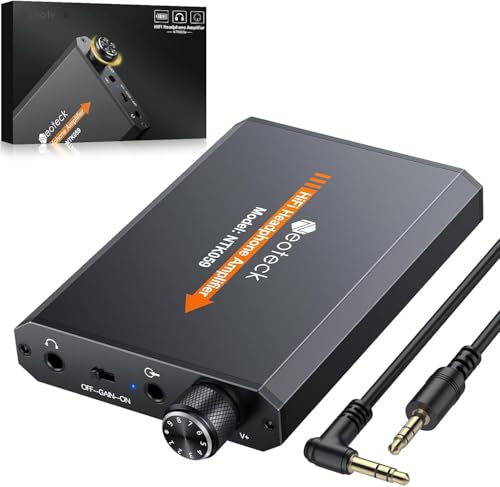
- Supports 16-300 ohm headphones
- Two-stage gain and 3.5mm connectivity
- 1500mAh battery rated for over 12 hours
Best For: Portable listening with a wide range of wired headphones
Best Studio Four-Channel Amp
LZSIG LHA2 Headphone Amplifier
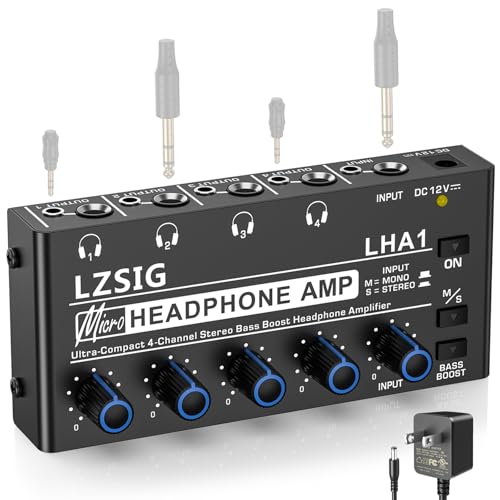
- Four outputs with independent volume controls
- Bass boost and stereo/mono switching
- Metal chassis with 1/8-inch and 1/4-inch support
Best For: Shared studio, rehearsal, and stage monitoring
Best Multi-Listener Pick
FIFINE N6 4-Channel Headphone Amplifier
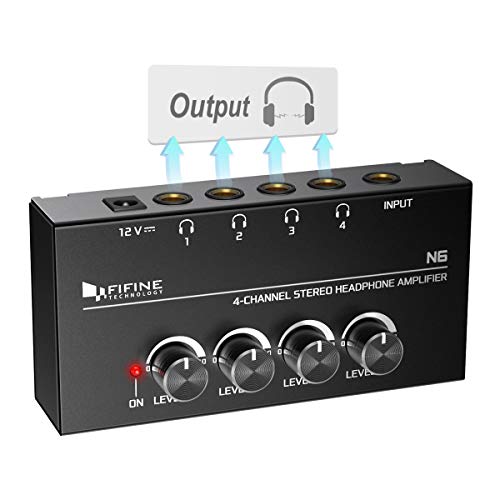
- Four independently controlled headphone outputs
- Compact metal build for studio or stage use
- 12V adapter included; cables sold separately
Best For: Sharing one audio source with up to four listeners
Best Portable Option

- 3.5mm and RCA input support
- 3.5mm and 6.3mm headphone outputs
- Lightweight body with analog volume control
Best For: Portable and home stereo listening setups
Best for Large Studio Monitoring
8-Channel Headphone Mixing Amplifier

- Eight channels and up to 16 headphone outputs
- Flexible mono/stereo routing with independent controls
- 1U rack design with LED meters
Best For: Professional studios and live setups with multiple mixes
Best Portable High-Impedance Pick
eSynic Rechargeable Headphone Amplifier

- Supports 16-600Ω headphones
- Two-stage gain switch
- 12+ hours of playback
Best For: Portable listening across low- and high-impedance headphones
Best for Shared Monitoring
Pyle PHA40 Four-Channel Headphone Amplifier

- Supports four headphones
- Independent volume controls
- 1/4-inch TRS connections
Best For: Studio and rehearsal monitoring for small groups
Best Compact HiFi Value
LVY Portable Headphone Amplifier
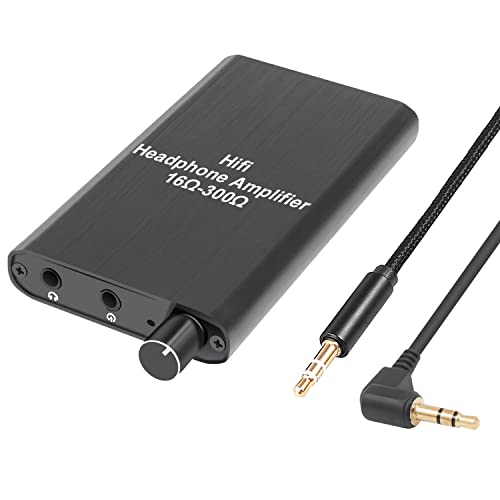
- Supports 16-300Ω headphones
- Two-stage gain switch
- Compact 3.5mm design
Best For: Everyday portable listening from phones and other 3.5mm devices
Best Guitar Practice Amp – Fender Mustang Micro Plus
The Fender Mustang Micro Plus is a headphone amplifier designed for guitarists who want modeled amp tones, effects, and quiet practice in a compact format. Its 25 amp models, 25 effect models, editable presets, Bluetooth streaming, and USB recording make it more versatile than a basic practice amp.
Best For: Guitarists and bassists who want portable silent practice, tone experimentation, and mobile recording.
Pros:
- Includes 25 amp models, 25 effect models, 100 editable preset slots, global EQ, and a built-in tuner.
- Bluetooth supports streaming with video sync for playing along with songs and videos.
- USB recording, Fender Tone app compatibility, and a rechargeable battery add practical flexibility.
- Compact design works with wired earbuds or wireless headphones.
Cons:
- It is primarily a guitar and bass amplifier rather than a general-purpose headphone amp.
- Battery play time is listed at 4+ hours, which is less than some portable audio amplifiers.
Choose the Mustang Micro Plus if built-in modeling and practice features matter more than a simple signal boost. It is especially well suited to players who want an all-in-one headphone amplifier for home, travel, and recording.
Best Four-Listener Splitter – Mackie HM-4
The Mackie HM-4 is a straightforward four-channel headphone amplifier for sharing one audio source during tracking sessions, rehearsals, or group listening. It accepts 1/4-inch or 1/8-inch input and gives each listener a dedicated output and volume control.
Best For: Small recording sessions, rehearsals, and monitoring setups where up to four people need independent volume control.
Pros:
- Drives four headphones from a single source.
- Each of the four outputs has its own level control.
- Compact metal construction can be attached to a desk, rack, or stand with Velcro.
- Supports 1/4-inch and 1/8-inch source connections.
Cons:
- It is a corded unit and requires a power supply.
- It focuses on distribution and monitoring rather than tone shaping or wireless features.
The HM-4 is a practical headphone amplifier when the main goal is giving several listeners control over their own levels. Its compact four-output layout keeps shared monitoring simple without adding unnecessary features.
Best Portable Hi-Fi Amp – Neoteck 16-300 Ohm
The Neoteck 16-300 Ohm is a portable headphone amplifier for listeners who need additional drive from phones, laptops, media players, or other compact sources. It supports headphones from 16 to 300 ohms and combines two-stage gain, volume control, and a rechargeable battery in a smartphone-sized aluminum body.
Best For: Mobile listeners using low-, medium-, or high-impedance wired headphones who want a compact, rechargeable amplifier.
Pros:
- Supports a broad 16-300 ohm headphone range.
- Two-stage gain switch, volume adjustment, and a 3.5mm input/output support practical listening control.
- Claims an SNR above 120 dB and THD+N of 0.0003% in the supplied specifications.
- 1500mAh rechargeable battery provides over 12 hours of continuous use.
Cons:
- It is designed for wired 3.5mm connections rather than wireless headphone use.
- The supplied details list different item weights, so buyers should verify the final product specifications.
For listeners who value portability and headphone impedance flexibility, the Neoteck is a well-equipped headphone amplifier. Its long stated battery life and compact aluminum design make it convenient for travel and extended listening.
Best Studio Four-Channel Amp – LZSIG LHA2 Headphone Amplifier
The LZSIG LHA2 is a four-channel headphone amplifier built for shared monitoring in home studios, stage setups, and rehearsal environments. It provides four independent level controls, supports 1/8-inch and 1/4-inch plugs, and adds stereo/mono switching plus a bass-boost function.
Best For: Musicians, producers, and small groups that need four individually controlled headphone feeds from one source.
Pros:
- Four independent outputs and volume controls support multi-person monitoring.
- Works with 3.5mm and 6.35mm TS/TRS connections and headphones from 32 to 100 ohms.
- Bass boost and stereo/mono switching provide extra monitoring flexibility.
- Metal chassis and heavy-duty knobs are suited to regular studio or stage use.
Cons:
- It is a headphone amplifier, not a mixer.
- The supplied notes identify the model as LHA1 in the product details, despite the LHA2 title and feature description.
- The unit requires a 12V power source.
The LZSIG is a strong choice when four people need separate monitoring levels and compatible headphone connections. Its durable construction and stereo/mono controls add useful studio-oriented practicality, while buyers should confirm the exact model and included power arrangement.
Best Multi-Listener Pick – FIFINE N6 4-Channel Headphone Amplifier
The FIFINE N6 is a practical headphone amplifier for sharing one stereo source with up to four listeners. It provides four independently controlled 1/4-inch outputs, making it useful for recording sessions, stage monitoring, or watching TV with headphones.
Best For: Small recording setups, rehearsal spaces, and shared listening with up to four headphones.
Pros:
- Four outputs with separate volume controls and no stated signal loss when fully connected.
- Compact metal construction with durable connections and smoothly operating knobs.
- Includes a 12V DC power adapter and power indicator light.
- Supports stereo or mono connections when the appropriate TRS or TS cables are used.
Cons:
- All input and output connections use 6.35mm ports.
- TRS/TS cables are not included.
- It is a one-input, four-output amplifier, not a mixer.
If you need a straightforward headphone amplifier for distributing one source to several people, the N6 offers useful independent level control in a compact, studio-friendly design.
Best Portable Option – TNP 3.5mm Headphone Amplifier
The TNP portable headphone amplifier is designed to add adjustable amplification to PC, home audio, and portable listening setups. It combines RCA and 3.5mm input support with both 3.5mm and 6.3mm headphone outputs, plus a front volume knob for quick level changes.
Best For: Portable listening, home component systems, and users who need flexible input and headphone connection options.
Pros:
- Offers 3.5mm and RCA stereo inputs, with support for 3.5mm or 6.3mm output.
- Analog volume control and power switch provide simple, precise operation.
- Compact, lightweight design with an LED power indicator.
- Includes a DC adapter and can also use Micro-USB power.
Cons:
- Only one input should be connected at a time.
- Requires 5V power.
- Its listed output power is 100 milliwatts, so system requirements should be checked before purchase.
Choose this headphone amplifier when portability and connection flexibility matter more than multiple simultaneous headphone outputs. Its two-channel design suits everyday stereo listening and basic home audio integration.
Best for Large Studio Monitoring – 8-Channel Headphone Mixing Amplifier
This 8-channel headphone amplifier is built for professional monitoring environments that need independent routing and level control. It provides eight high-power amplifier channels, front and rear outputs for up to 16 headphones, LED meters, and mono/stereo input options.
Best For: Recording studios, live-sound monitoring, and setups requiring multiple discrete headphone mixes.
Pros:
- Supports up to 16 headphones across eight independently controlled channels.
- Each channel includes front and rear 1/4-inch outputs plus a dedicated rear input.
- Offers IN1/IN2 routing, per-channel mono mode, and independent volume controls.
- Six-segment LED meters and overload protection help with real-time level monitoring.
Cons:
- Its 1U rack-mount format is more suited to installed or professional systems than casual use.
- Connections are wired through 6.35mm headphone jacks.
- The unit is designed for professional applications and may be more capability than a small setup needs.
For complex tracking or live-monitoring workflows, this headphone amplifier stands out for its channel count, routing flexibility, and visual metering. It is the strongest fit when several performers need controlled, separate monitoring paths.
Best Portable High-Impedance Pick – eSynic Rechargeable Headphone Amplifier
If you need a portable headphone amplifier for everything from sensitive IEMs to demanding monitoring headphones, the eSynic offers flexible load matching in a compact aluminum body. Its two-stage gain switch supports headphones rated from 16 to 600Ω, while the rechargeable battery provides more than 12 hours of playback.
Best For: Listeners who want a rechargeable amp for phones, laptops, gaming consoles, or other 3.5mm sources, especially when using a wide range of headphone impedances.
Pros:
- Supports a broad 16-600Ω impedance range.
- Two-stage gain switch helps match low- and high-impedance headphones.
- Offers more than 12 hours of playback and an aluminum enclosure.
- Includes two 3.5mm audio cables.
Cons:
- Uses a 3.5mm analog connection rather than digital inputs.
- Its single-channel design is intended for one headphone connection at a time.
Choose this eSynic model when portability, battery operation, and broad impedance support matter most. The gain switch and stated 80mW output make it particularly versatile for personal listening and monitoring.
Best for Shared Monitoring – Pyle PHA40 Four-Channel Headphone Amplifier
The Pyle PHA40 is a practical headphone amplifier for studios, rehearsals, and recording setups where several people need to monitor the same source. It provides four 1/4-inch stereo headphone outputs, with a dedicated volume control for each listener.
Best For: Small recording groups, studios, and live applications that need to distribute one audio source to up to four headphones.
Pros:
- Drives up to four pairs of headphones simultaneously.
- Each channel has an independent rotary volume control.
- Uses 1/4-inch TRS input and output connections.
- Compact design measures about 4.07 by 1.18 by 2.24 inches according to the supplied description.
Cons:
- Requires corded electric power.
- Its 1/4-inch connections may require adapters for headphones with smaller plugs.
- It is designed for shared monitoring rather than portable, battery-powered use.
This Pyle is the strongest fit when multiple listeners need separate volume control from one mix. Its four-channel layout is more useful for collaborative monitoring than for a single listener seeking a pocket-sized amp.
Best Compact HiFi Value – LVY Portable Headphone Amplifier
The LVY A010 is a compact headphone amplifier for listeners who want a louder, sharper signal from 3.5mm devices without carrying a larger desktop unit. It includes a two-stage gain switch and supports headphones rated from 16 to 300Ω.
Best For: Phone, MP3/MP4 player, laptop, and other 3.5mm-device users seeking a small rechargeable amp for everyday listening.
Pros:
- Supports a 16-300Ω headphone load range.
- Two-stage gain switch helps optimize performance for different headphones.
- Provides 3.5mm auxiliary input and output connections.
- Compact matte-finish design weighs 0.16 kg and includes a two-year warranty.
Cons:
- Rated use time is more than five hours, shorter than some rechargeable alternatives.
- It is limited to 3.5mm analog devices and connections.
The LVY is a sensible choice for everyday portable use when you want gain adjustment and broad compatibility in a small enclosure. Consider another model if you need longer battery life or support for headphones above 300Ω.
How We Picked the Best Headphone Amplifiers
We evaluated these models by looking at their intended use, connectivity, output count, portability, control layout, power requirements, and compatibility with different headphone impedances. We also separated compact personal amps from multi-channel distribution units, since they solve different problems.
Product specifications matter, but so does practicality. A rechargeable model may be ideal for commuting, while a rack- or desktop-style amplifier is better for rehearsals, recording sessions, or shared listening. For guitarists, built-in amp and effects modeling can be more valuable than maximum output power.
Quick Comparison
| Use case | What to prioritize | Best fit from this roundup |
|---|---|---|
| Guitar practice | Modeling, effects, Bluetooth, low-latency monitoring | Fender Mustang Micro Plus |
| Portable listening | Rechargeable battery, gain control, compact design | eSynic or LVY |
| Two to four listeners | Multiple outputs and independent volume controls | Mackie HM-4 or FIFINE N6 |
| Studio or rehearsal distribution | High output count, mono/stereo modes, sturdy housing | 8-Channel Headphone Mixing Distribution Amplifier |
| Basic home use | Simple inputs, volume control, affordable operation | TNP or Neoteck |
Key Buying Factors for a Headphone Amplifier
Inputs and Outputs
Check the connector types before buying. Portable units commonly use a 3.5mm input, while studio equipment may use RCA, 1/4-inch TRS, or mixer-oriented connections. If several listeners need to connect at once, count the available outputs and confirm whether each channel has its own level control.
Power and Headphone Impedance
Low-impedance headphones are generally easy to drive, but high-impedance models may benefit from a stronger amplifier and a gain switch. Portable specifications such as 16–600 ohms can indicate broad compatibility, though real-world performance also depends on sensitivity and the amplifier’s available voltage and current.
Portability and Power
Battery-powered models are convenient with phones, computers, and portable players, but battery life and charging needs matter. Desktop distribution amps are less portable but typically provide more outputs, sturdier controls, and consistent power from an AC adapter.
Features That Match Your Setup
Choose bass boost only if you want an intentional low-end lift, and use gain controls carefully to avoid hiss or distortion. Guitarists should look for modeling, effects, Bluetooth audio, and a suitable instrument connection. For recording, prioritize clean monitoring, channel count, and reliable stereo operation over decorative extras.
Who Should Buy Which Headphone Amplifier?
Choose the Fender if you want a dedicated guitar-practice solution with amp and effects models. Choose the Mackie or FIFINE for sharing one stereo source with several listeners. Choose the 8-channel unit for rehearsals, classrooms, studios, or other setups that need many headphone feeds.
Choose eSynic or LVY for rechargeable personal listening and added gain flexibility. Choose Neoteck or TNP for straightforward, budget-friendly amplification. The LZSIG and four-channel portable models are better suited to users who need multiple outputs in a compact format.