A rechargeable clip-on tuner keeps spare button batteries off your shopping list. The best choice is also easy to read on a headstock, simple to position, and suited to the instruments you play.
These 10 options include straightforward guitar tuners, flexible multi-instrument models, and display-focused picks. Use the guide below to narrow down the features that matter before you buy.
Best 10 Rechargeable Guitar Tuners Picks for 2026
Widest Calibration Range

- 410–460 Hz A4 calibration
- Five tuning modes
- Anti-glare TFT display
Best For: Multi-instrument players needing broad calibration
Open-Tuning Option

- Guitar open-tuning detection
- Includes cello and chromatic tuning
- Up to 10 hours per charge
Best For: Guitarists using open tunings
Fast-Charge Pick
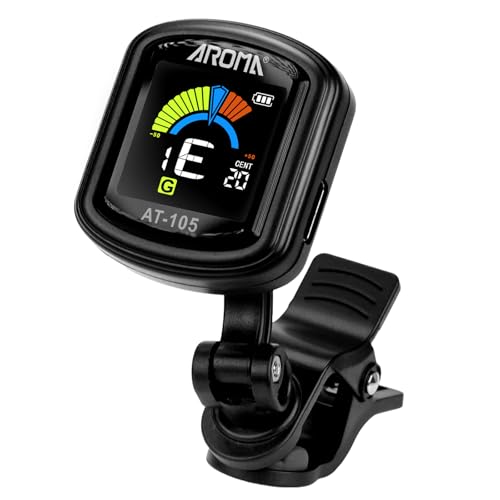
- One-hour stated charge time
- Up to 5.5 hours continuous use
- Color-coded pitch feedback
Best For: Players wanting clear charge and runtime figures
Longest Listed Runtime
D'Addario Eclipse Rechargeable Tuner

- Up to 24 hours per charge
- 435–450 Hz calibration
- Dual-swivel color screen
Best For: Guitar and bass players prioritizing runtime
Room-Noise Shielding
Snark ST-8 Titanium Rechargeable Tuner
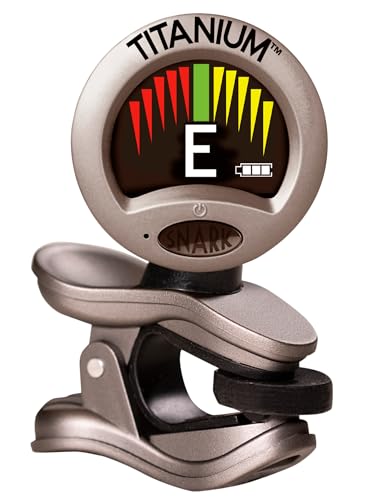
- Titanium-and-rubber housing designed to block room noise
- Super-bright display
- USB charging cable included
Best For: Players prioritizing room-noise shielding
Viewing-Angle Flexibility
D'Addario Nexxus 360 Clip-On Tuner

- 360-degree rotating display and clamp
- Up to 24 hours of tuning per charge
- Adjustable 415–465 Hz calibration
Best For: Guitar and bass players who value flexible positioning
Quick-Charge Convenience

- Quick charge advertised to last weeks or months
- Super-bright display
- Case, cleaning cloth, and USB cable included
Best For: Players wanting quick charging and included accessories
Best Screen Visibility

- Readable TFT display
- Dual 360-degree swivels
- Four hours per charge
Best For: Players prioritizing screen visibility and positioning
Best Charging Convenience

- Quick charge; long stated interval
- Super-bright display
- Case and cable included
Best For: Players who want fewer charging interruptions
Best Alternate Tunings
LEKATO Rechargeable Clip-On Tuner

- Alternate and flat guitar tunings
- Over 10 hours stated runtime
- Five tuning modes
Best For: Guitarists who frequently change tunings
Widest Calibration Range – Aroma AT-790 Clip-On Tuner
Among rechargeable guitar tuners, the Aroma AT-790 is a practical choice if you use different instruments or need flexible pitch calibration. Its five modes cover guitar, bass, violin, ukulele, and chromatic tuning, while its adjustable A4 reference spans 410–460 Hz.
Best For: Multi-instrument players who need a broad calibration range and a screen designed for bright conditions.
Pros:
- Piezo sensor with a stated ±0.5-cent accuracy.
- High-resolution TFT display with an anti-glare design.
- 360° dual-axis rotation and a silicone-padded clip.
Cons:
- Manufacturer specifies USB-A-to-USB-C charging; USB-C-to-USB-C cables should not be used.
- No specific continuous-runtime figure is provided.
The broad A4 range is its standout feature. Check your charging setup before buying, particularly if you normally carry only USB-C-to-USB-C cables.
The New Bee GT30 stands out among rechargeable guitar tuners for its guitar open-tuning detection. It also lists tuning support for bass, ukulele, violin, cello, and chromatic use, making it worth considering if your instrument collection goes beyond guitar.
Best For: Guitarists who use open tunings and players who also tune cello or other listed instruments.
Pros:
- Includes automatic open-tuning detection for guitar.
- Color screen rotates 360° for adjustable viewing.
- Built-in rechargeable battery offers up to 10 hours of tuning.
Cons:
- No numerical accuracy or calibration range is specified.
Open-tuning support is the clearest reason to choose this model. If a documented accuracy tolerance or adjustable pitch reference matters more, compare those specifications before deciding.
Aroma Guitar Tuner Clip On Rechargeable Chromatic Tuner for Guitar Bass Ukulele Violin Mandolin
Check Price On AmazonIf you are comparing rechargeable guitar tuners by charge and runtime figures, the Aroma AT-105 provides both: its listed one-hour charge yields up to 5.5 hours of continuous use. Five modes cover guitar, bass, violin, ukulele, and chromatic tuning.
Best For: Players who want a stated charging time, color-coded pitch feedback, and multi-instrument modes.
Pros:
- Piezo sensor with a stated ±0.5-cent accuracy.
- Display uses yellow for flat, red for sharp, and blue for in-tune notes.
- Adjustable A4 reference from 430–450 Hz.
- 360° dual-axis display rotation and a silicone-padded clip.
Cons:
- Manufacturer specifies USB-A-to-USB-C charging, not USB-C-to-USB-C.
- Its stated continuous runtime is up to 5.5 hours.
This is the more clearly specified Aroma option for charge planning, though its A4 range is narrower than the AT-790’s. The color-coded display also makes pitch direction easy to identify at a glance.
The D’Addario Eclipse is a straightforward choice among rechargeable guitar tuners for guitar and bass players who prioritize time between charges. Its stated 24 hours of tuning per charge is the longest specified runtime in this group.
Best For: Guitar or bass players who want long battery life and flexible headstock placement.
Pros:
- Up to 24 hours of tuning per charge.
- Full-color vertical screen with dual swivels for left- or right-handed placement.
- Adjustable calibration from 435–450 Hz.
- Strong clamp designed to mount in different headstock positions.
Cons:
- The supplied notes describe guitar and bass use, not dedicated modes for other instruments.
Choose this model if you would rather charge less often than have a long list of instrument modes. Its swiveling display also gives you options for positioning it on the headstock.
Room-Noise Shielding – Snark ST-8 Titanium Rechargeable Tuner
Among rechargeable guitar tuners, the Snark ST-8 Titanium stands out for its titanium-and-rubber housing, designed to block room noise. Its super-bright display and included USB charging cable cover two practical needs: visibility and recharging.
Best For: Players who want a rechargeable tuner with a housing designed to reduce room-noise interference.
Pros:
- Titanium-and-rubber housing is designed to block room noise.
- Super-bright display.
- Rechargeable, with a USB charging cable included.
Cons:
- The supplied notes do not state battery life per charge.
- No calibration range or stated tuning accuracy is provided.
Choose this model for its housing and display; if a specific runtime or calibration range matters to you, those details are not available in the supplied specifications.
The D’Addario Nexxus 360 is one of the more adjustable rechargeable guitar tuners here: its bright screen and clamp rotate 360 degrees, giving you multiple viewing and mounting positions on a headstock. It is specified for guitar and bass, with up to 24 hours of tuning per charge.
Best For: Guitar or bass players who want a repositionable screen and a stated battery runtime.
Pros:
- Bright display rotates 360 degrees for different viewing angles.
- Strong, 360-degree rotating clamp offers headstock placement options.
- Up to 24 hours of tuning per charge; USB cable included.
- Adjustable calibration range of 415–465 Hz.
Cons:
- The supplied notes do not give a numerical accuracy tolerance.
The rotating display, adjustable calibration, and stated runtime make this a well-specified option if positioning and tuning settings are your priorities.
For shoppers comparing rechargeable guitar tuners, the Snark SST-1 Super Tight offers a quick-charge design that the supplied notes say can last weeks or months. It also has a super-bright display and comes with a USB charging cable, protective case, and cleaning cloth.
Best For: Players who want quick charging and a tuner packaged with protective accessories.
Pros:
- Quick charge is advertised to last weeks or months.
- Super-bright display.
- Includes a USB charging cable, protective case, and cleaning cloth.
Cons:
- No specific charging time or measured runtime is supplied.
- No calibration range or numerical accuracy tolerance is stated.
The SST-1 is worth considering for its charging claim and included accessories, though the notes do not provide figures for a direct runtime or precision comparison.
Best Screen Visibility – Sondery ClipTune TFT
Among rechargeable guitar tuners, the Sondery ClipTune stands out for its high-definition TFT display, designed to remain readable in sunlight and under stage lighting. Its contact-based piezo sensor picks up instrument vibration rather than ambient sound.
Best For: Players who need a readable display and flexible clip positioning.
Pros:
- TFT screen is designed for visibility in bright conditions.
- Two 360-degree swivel mechanisms offer flexible viewing angles.
- 410–460 Hz calibration range and multiple tuning modes.
- USB rechargeable, with a stated four hours of use per charge.
Cons:
- Four hours per charge may require more frequent charging than longer-running options.
The ClipTune is a practical choice if display readability and positioning matter most; check its charge before a long session.
Best Charging Convenience – Snark SNARK2
The Snark SNARK2 is a straightforward pick among rechargeable guitar tuners for players who want to charge less often. Snark says a quick charge can last weeks or months, though actual time between charges will depend on use.
Best For: Players who prefer infrequent charging and an included storage case.
Pros:
- Quick-charge battery is advertised to last weeks or months.
- Super-bright display supports easy viewing.
- Vulcanized rubber joints are designed for durability.
- Includes a USB charging cable, protective case, and cleaning cloth.
Cons:
- Supplied details do not specify tuning modes or calibration range.
The SNARK2 keeps the focus on charging convenience and useful accessories. If you need a particular tuning mode, confirm it before buying.
Best Alternate Tunings – LEKATO Rechargeable Clip-On Tuner
For players comparing rechargeable guitar tuners for alternate tunings, the LEKATO clip-on offers shortcuts for Drop D, Open G, Open D, Open E, and flat tuning in guitar mode. Its piezo sensor and rotatable color display round out a feature set built for stringed instruments.
Best For: Guitarists who regularly switch between standard, alternate, and flat tunings.
Pros:
- Dedicated guitar-mode options include four alternate tunings and two flat settings.
- Stated battery life exceeds 10 hours of continuous use per charge.
- 360-degree rotating clip helps position the high-contrast display.
- Five modes cover chromatic, guitar, ukulele, bass, and violin tuning.
Cons:
- Alternate-tuning shortcuts are specified for guitar mode, not every mode.
LEKATO offers the most explicit alternate-tuning controls of these three options, plus a stated runtime suited to longer sessions.
How We Picked These Rechargeable Guitar Tuners
We focused on rechargeable clip-on tuners from the selected lineup, comparing the features a buyer can check before purchase: display type, screen rotation, listed instrument support, and tuning modes. We also considered whether a model is positioned as a simple everyday tuner or a more flexible option for multiple instruments. A product listing alone cannot verify real-world accuracy, battery life, charging speed, or durability, so check current specifications and owner feedback for those details.
Quick Comparison: Which Features Matter Most?
For a familiar, guitar-focused headstock tuner, start with the D’Addario Eclipse Rechargeable or a Snark model. If positioning the screen is a priority, compare the D’Addario Nexxus 360 with the rotatable options from New Bee and LEKATO. The Aroma model listed with a TFT screen and the Sondery TFT are worth a closer look if display readability drives your decision. Players who switch among guitar, bass, ukulele, violin, or other instruments should compare each model’s stated tuning modes and supported instruments rather than assuming every chromatic tuner offers the same presets.
Key Buying Factors for Rechargeable Guitar Tuners
Display and Headstock Fit
Choose a screen you can read at your usual playing angle and in your typical lighting. A rotating display can help on differently shaped headstocks, but the clip must also grip securely without getting in the way of your hand or other hardware. Check dimensions and clip design if you use a compact headstock or a crowded setup.
Tuning Modes and Instruments
Chromatic mode helps with alternate tunings and instruments beyond standard guitar, while dedicated instrument modes can make routine tuning more straightforward. Confirm that the tuner supports what you actually play, especially if you need bass, ukulele, violin, banjo, or mandolin settings. Check how the display indicates a note is in tune; a clear visual cue is more useful than a long feature list.
Charging and Everyday Convenience
Check the specified charging port, included cable, stated runtime, and low-battery indication before ordering. Rechargeable does not mean maintenance-free: you still need to charge the tuner before a rehearsal or performance. If you regularly travel without easy access to power, give battery life and charging convenience extra weight.
Who Should Buy Which Rechargeable Guitar Tuners?
Buy a straightforward D’Addario or Snark clip-on if you mainly want a familiar tuner for one guitar. Look at the Nexxus 360, New Bee, or LEKATO if adjustable viewing angles are more important to your setup. Consider the TFT-screen Aroma or Sondery options if a prominent display is your first priority. For a multi-instrument household, choose by confirmed modes, clip fit, and readability—not by the number of instruments named in the listing alone.