Building a pedalboard should be simple: plug in, power up, and play. The right daisy chain cable can keep your setup compact while giving multiple pedals the 9V DC power they need.
This roundup focuses on practical options for different board sizes, plug styles, and power needs, so you can choose a cable that fits your rig without adding clutter.
Best 10 Daisy Chain Cables for Guitar Pedals Picks for 2026
Best for Simple 5-Pedal Runs
SONICAKE 9V 5-Way Daisy Chain Cable
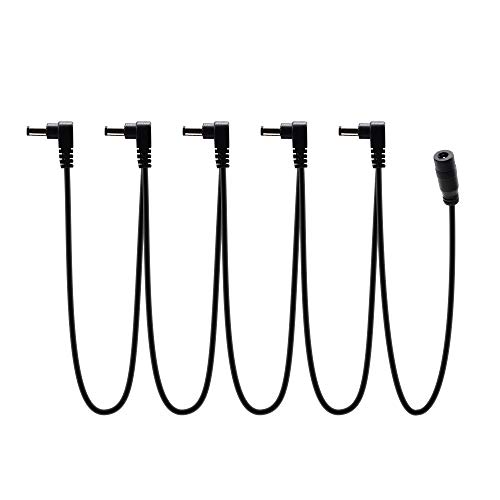
- 5 outputs for compact pedalboards
- Right-angle plugs save space
- Easy shared-power setup
Best For: Players who want a simple, affordable way to power up to five pedals from one adapter.
Best for Simple 1-to-2 Power Split
1-to-2 Guitar Pedal Power Cable

- 1-to-2 split for powering two pedals
- Copper-core build for durability
- Compatible with 9V DC pedal adapters
Best For: Players who need a basic splitter for powering two pedals from one 9V adapter.
Best for Clean 3-Pedal Routing

- Feeds 3 pedals from one 9V adapter output
- Right-angle plugs keep the board tidy
- 26AWG copper core helps with cleaner power delivery
Best For: Compact pedalboards needing a neat, basic 3-pedal power split.
Best for Long Pedal Runs
1to5 Way Daisy Chain Pedal Power Cable

- 1-to-5 splitter for powering multiple pedals
- Right-angle 5.5x2.1mm plugs save space
- 30cm spacing helps keep boards neat
Best For: Players who want a tidy, low-cost way to power several pedals from one supply.
Best for Two-Pedal Setups
MEETOOT 1-to-2 Daisy Chain Cable

- Powers two pedals from one 9V DC adapter
- Spring-loaded plugs help prevent disconnects
- Copper core and PVC jacket keep it lightweight and durable
Best For: Players with small pedalboards who only need to run two effects from a single power supply.
Best for Neat Pedalboards
1to3 Way Daisy Chain Pedal Power Cable

- 1-to-3 split for powering multiple pedals from one adapter
- Right-angle 5.5 x 2.1 mm plugs save space on crowded boards
- 30 cm spacing helps reduce cable mess
Best For: Players who want a tidy, budget-friendly way to power a small pedalboard from one source.
Best for 8-Pedal Setups

- Powers up to 8 pedals from one adapter
- Right-angle plugs help keep boards tidy
- Universal 5.5mm x 2.1mm DC compatibility
Best For: Players who want an easy, low-cost way to power multiple 9V pedals from a single supply.
Best for Neat Board Layouts
5-Way Right-Angle Daisy Chain Cable

- 5-way split from one DC output
- Right-angle plugs for cleaner routing
- 22AWG copper core for lower voltage drop
Best For: Players who want a tidy, straightforward power splitter for standard pedalboards.
Best for Neat Two-Pedal Rigs
1 to 2 Way 9V Daisy Chain Splitter

- Splits one 9V supply into two pedals
- Right-angle plugs keep boards tidy
- Two-pack adds extra flexibility
Best For: Players with small pedalboards who want a clean, simple way to power two 9V pedals.
Best for Multi-Pedal Starter Rigs
2-Piece 9V Guitar Pedal Daisy Chain Set

- Includes both 1-to-2 and 1-to-3 splitters
- PVC build with copper core for stable power
- Good fit for tidy, small 9V pedalboards
Best For: Players building a compact 9V pedalboard who want an easy, budget-friendly power splitter set.
Best for Simple 5-Pedal Runs – SONICAKE 9V 5-Way Daisy Chain Cable
If you need an easy, low-cost way to power multiple pedals from a single adapter, this SONICAKE option is a straightforward pick among daisy chain cables for guitar pedals. The 5-way layout keeps a compact board tidy, and the right-angle plugs help reduce strain where space is tight.
Best For: Guitarists who want a simple 9V daisy chain for powering up to five pedals without adding extra bulk.
Pros:
- Five outputs cover small to medium pedalboards
- Right-angle plugs help with tight spacing and cleaner routing
- Simple plug-and-play setup with standard 9V pedal power
Cons:
- Not ideal for large boards that need more isolated outputs
- Shared power can introduce noise with some pedal combinations
For players prioritizing convenience over advanced power management, this is a practical everyday choice. It fits well in basic daisy chain cables for guitar pedals setups where keeping cost and clutter down matters most.
Best for Simple 1-to-2 Power Split – 1-to-2 Guitar Pedal Power Cable
If you need a straightforward way to power two stompboxes from one 9V DC adapter, this is a practical option in the world of daisy chain cables for guitar pedals. It uses a copper-core build and a simple 1-to-2 layout, making it a clean fit for compact pedalboards and basic signal-chain setups.
Best For: Players who want an uncomplicated 1-to-2 power splitter for small pedalboards or a spare cable for a 9V DC supply.
Pros:
- 1-to-2 design keeps power distribution simple
- Copper core construction for durability and long-term use
- Works with standard 9V DC guitar pedal adapters
- Compact, no-fuss accessory for basic boards
Cons:
- Only includes a single cable, not a full multi-pedal chain
- Must confirm connector size before buying
- Not ideal for larger boards that need multiple outputs
For players who only need to split one adapter into two outputs, this is a sensible low-complexity pick. It won’t replace a full power solution, but as daisy chain cables for guitar pedals go, it covers the essentials for small setups without extra clutter.
Best for Clean 3-Pedal Routing – 3-Way 9V DC Daisy Chain Cable
If you need a simple power split for a small pedalboard, daisy chain cables for guitar pedals like this 3-way 9V DC lead are an easy, low-cost fix. It takes one adapter output and feeds up to three pedals, with right-angle plugs and short spacing that help keep your board tidy.
Best For: Players running a compact board with up to three 9V pedals who want a neat, straightforward wiring setup.
Pros:
- Splits one 9V DC source into 3 pedal connections
- Right-angle plugs and 3.5mm cable help reduce clutter
- 26AWG oxygen-free copper core supports cleaner power transfer
- Short connector spacing works well on compact boards
Cons:
- Only provides three outputs
- Shared power may not suit pedals that are noisy or power-hungry
For basic setups, this is a practical way to simplify cable runs without spending much. Just make sure your adapter has enough current for all three pedals, since daisy chain cables for guitar pedals work best when the power supply and pedals are compatible.
Best for Long Pedal Runs – 1to5 Way Daisy Chain Pedal Power Cable
If you need a simple way to power several stompboxes from one adapter, these daisy chain cables for guitar pedals are a practical, low-cost fix. This 1-to-5 splitter supports 9V, 12V, and 18V DC setups, uses standard 5.5×2.1mm plugs, and helps keep a compact board tidier with right-angle connectors.
Best For: Guitarists who want to run multiple pedals from a single power supply without adding clutter.
Pros:
- Splits one DC output into five pedal connections
- Right-angle plugs and 30cm spacing help reduce cable mess
- Compatible with most pedals using 5.5×2.1mm jacks
- Copper-core build aims for solid conductivity and durability
Cons:
- Not ideal for pedals that need isolated power
- Must match voltage and polarity with your power supply
- May be longer than needed for very small pedalboards
For players wiring a straightforward board, this is a handy option that keeps things simple and affordable. If your setup can handle shared power, these daisy chain cables for guitar pedals are an easy way to connect more effects without buying extra adapters.
Best for Two-Pedal Setups – MEETOOT 1-to-2 Daisy Chain Cable
If you need a simple way to power two stompboxes from one 9V adapter, this is a straightforward option to consider among daisy chain cables for guitar pedals. It uses a 1-to-2 parallel split with spring-loaded male jacks, and the compact 60 cm length keeps pedalboard wiring tidy.
Best For: Players who want an inexpensive, no-fuss cable for running two pedals from a single DC supply.
Pros:
- 1-to-2 design powers two effects pedals from one 9V adapter
- Copper inner core helps conductivity and long-term reliability
- Spring-loaded male plugs help reduce accidental disconnects
- Lightweight PVC jacket is flexible and easy to route
Cons:
- Only supports two pedals, so it won’t replace a larger multi-output chain
- Not ideal if your board needs longer cable runs
For minimal setups, this MEETOOT cable covers the basics without adding clutter. It’s a practical pick if you’re comparing daisy chain cables for guitar pedals and only need to power a small pair of effects from one adapter.
Best for Neat Pedalboards – 1to3 Way Daisy Chain Pedal Power Cable
If you want a simple way to power a few stomps from one adapter, these daisy chain cables for guitar pedals keep the setup tidy without adding extra bulk. The 1-to-3 split works with many 9V, 12V, and 18V DC pedals, and the right-angle plugs help save space on crowded boards.
Best For: Guitarists who want a compact, low-cost way to run multiple pedals from a single power source.
Pros:
- Splits one DC power output into three pedal connections
- Right-angle 5.5 x 2.1 mm plugs help keep pedalboards neat
- Works with many common 9V, 12V, and 18V pedals
- 30 cm spacing between plugs reduces cable clutter
Cons:
- Only provides three connections, so larger boards may need more splitters
- Not a substitute for isolated power if you need maximum noise protection
- Compatibility still depends on your pedal voltage and polarity requirements
For players building a compact board, this is a practical, no-fuss option among daisy chain cables for guitar pedals. It focuses on space-saving and convenience, making it a solid pick when you need to power a small pedal run cleanly from one supply.
Best for 8-Pedal Setups – 1 to 8 Way Daisy Chain Cable
If you need affordable daisy chain cables for guitar pedals that can power a compact board without adding clutter, this 1-to-8 cable is a practical option. It keeps wiring simple, uses right-angle plugs for a cleaner layout, and is designed to run multiple 9V effects from one adapter.
Best For: Players who want a simple, low-cost way to power up to eight pedals from a single 9V supply.
Pros:
- Supports up to 8 pedals from one 9V adapter
- Right-angle plugs help keep pedalboards neat and organized
- 26AWG copper core aims for solid conductivity and reduced noise
- Universal 5.5mm x 2.1mm DC connections fit many common pedal setups
Cons:
- Not ideal if your pedals need isolated power
- All pedals must share enough voltage and current from the same supply
- 35cm spacing may be limiting for very spread-out boards
For budget-minded players, this is a straightforward way to tidy up a board and reduce cable mess. If your pedals are compatible and your power adapter has enough output, it’s a solid fit among daisy chain cables for guitar pedals for simple multi-pedal power sharing.
Best for Neat Board Layouts – 5-Way Right-Angle Daisy Chain Cable
If you want simple, reliable daisy chain cables for guitar pedals, this 5-way splitter is built for tidy pedalboards and short, efficient power runs. Its right-angle plugs help keep cables flat and organized, while the 22AWG oxygen-free copper core is designed to reduce voltage drop across your pedals.
Best For: Players who want a compact, orderly power-splitting cable for powering multiple pedals from a single DC output.
Pros:
- 5-way split lets one power source feed multiple pedals
- Right-angle plugs help keep your board layout clean
- 22AWG oxygen-free copper core helps minimize voltage drop
- 1 ft plug spacing gives a practical reach for many pedalboards
Cons:
- Not ideal for pedals that need isolated power
- DC5521 fit may not suit every pedal or supply
For compact rigs, this is a practical choice among daisy chain cables for guitar pedals because it balances reach, spacing, and a cleaner layout without adding extra complexity. If your setup uses standard DC-powered pedals and you want a straightforward splitter, it’s an easy utility pick.
Best for Neat Two-Pedal Rigs – 1 to 2 Way 9V Daisy Chain Splitter
1 to 2 Way Daisy Chain Guitar Effect Pedal Power Supply Splitter Adapter Cable - Black (2PCS)
Check Price On AmazonIf you need a simple way to power two stompboxes from one adapter, these daisy chain cables for guitar pedals are a practical, no-fuss option. The 1-to-2 layout keeps small boards cleaner, and the right-angle plugs help the cables sit tidily against your pedals.
Best For: Players with compact pedalboards who want an affordable splitter for powering up to two 9V pedals from one supply.
Pros:
- Splits one 9V DC supply into two pedal connections
- 26AWG oxygen-free copper core helps with solid power delivery
- Right-angle plugs and short spacing make cable runs neater
- Two-pack adds extra value or a backup cable
Cons:
- Only powers up to two pedals per cable
- Not a solution for isolated power needs or noisy high-draw pedals
- Short lead length may be limiting on larger boards
For basic two-pedal setups, this is a tidy, budget-friendly way to simplify power routing. If you just want dependable daisy chain cables for guitar pedals without adding bulk, it covers the essentials well.
Best for Multi-Pedal Starter Rigs – 2-Piece 9V Guitar Pedal Daisy Chain Set
If you need a simple way to power a small pedalboard, these daisy chain cables for guitar pedals give you both 1-to-2 and 1-to-3 split options in one package. They’re a practical pick for 9V setups when you want to keep wiring tidy without buying separate splitters.
Best For: Players building a compact pedalboard who want an affordable, easy way to power multiple 9V pedals from one source.
Pros:
- Includes both 1-to-2 and 1-to-3 daisy chain cables
- PVC casing and oxygen-free copper core for durability and stable power transfer
- Neat, low-clutter setup for small pedalboards
- Works with most DC 9V guitar pedals
Cons:
- Not ideal for large boards with many pedals
- Shared power can be less flexible than isolated outputs
- Best suited to 9V pedals, not broader voltage needs
For players comparing daisy chain cables for guitar pedals, this set stands out for its included two-split and three-split options, making it a straightforward choice for beginner and budget-conscious rigs. It’s a clean, functional solution when you just need reliable pedal power without extra complexity.
How We Picked the Best Daisy Chain Cables for Guitar Pedals
We evaluated Daisy Chain Cables for Guitar Pedals based on connector count, plug angle, cable layout, compatibility with common 9V DC pedal setups, and how well each option suits small to mid-size boards. We also looked for practical details such as right-angle plugs, multi-output spacing, and support for different voltage labels when clearly stated by the manufacturer.
Quick Comparison
The main difference between these cables is how many pedals they can power at once. 1-to-2 and 1-to-3 options are best for minimal rigs, 1-to-5 models suit growing boards, and 1-to-8 versions are for larger setups that still want a single adapter path. Right-angle connectors are useful when pedal spacing is tight and cable strain is a concern.
Key Buying Factors for Daisy Chain Cables for Guitar Pedals
Connector Count and Spacing
Choose a cable with enough outputs for your current pedals, plus one spare if you expect to add another stompbox soon. Also check spacing between plugs, since close connectors can be awkward on larger pedals or crowded pedalboards.
Voltage and Power Compatibility
Most Daisy Chain Cables for Guitar Pedals are designed for standard 9V DC center-negative effects. If a listing mentions 12V or 18V support, confirm that your pedals and adapter are actually rated for those voltages before using them.
Plug Orientation
Right-angle plugs are often the better choice for low-profile boards because they reduce cable bend and help keep the layout tidy. Straight plugs can work well when ports are more accessible or your board has extra room.
Noise and Cable Quality
For analog pedals, a basic daisy chain is usually fine, but higher-gain or digital pedals may be more sensitive to noise. Look for listings that mention shielding or noise reduction, and remember that a daisy chain shares one power source across multiple pedals.
Who Should Buy Which Daisy Chain Cables for Guitar Pedals?
If you run two pedals, a simple 1-to-2 cable is the easiest and cleanest solution. If you have a compact board with three to five pedals, a 1-to-3 or 1-to-5 option usually offers the best balance of flexibility and simplicity. Players with larger all-analog boards may prefer a longer chain, while anyone running noisy digital effects should consider whether an isolated power supply would be a better long-term fit.
In short, the best daisy chain cable is the one that matches your board size, plug spacing, and noise tolerance without overcomplicating your setup.